Best Castles in Kent: The ‘Garden of England’ Heritage Trail
Kent packs more castles per mile than almost anywhere else in England — and with orchards, oast houses, and the coast in between, it might be the perfect county for a castle-hopping camping trip. Here’s our guide to the best castles in Kent, plus where to pitch up nearby.
Kent has been England’s front door for two thousand years. The Romans landed here, the Normans fortified here, and Henry VIII built his coastal defences here when he fell out with most of Europe. The result? The ‘Garden of England’ is absolutely stuffed with castles — from mighty medieval fortresses to fairytale moated manors.
Even better for us camping folk: Kent’s castles are close together. You can base yourself at one campsite and reach three or four castles within a 30-minute drive, or turn the whole county into a slow, meandering heritage trail over a long weekend.
Here are the castles in Kent we think are genuinely worth your time — and how to plan a trip around them.
1. Dover Castle — The Key to England
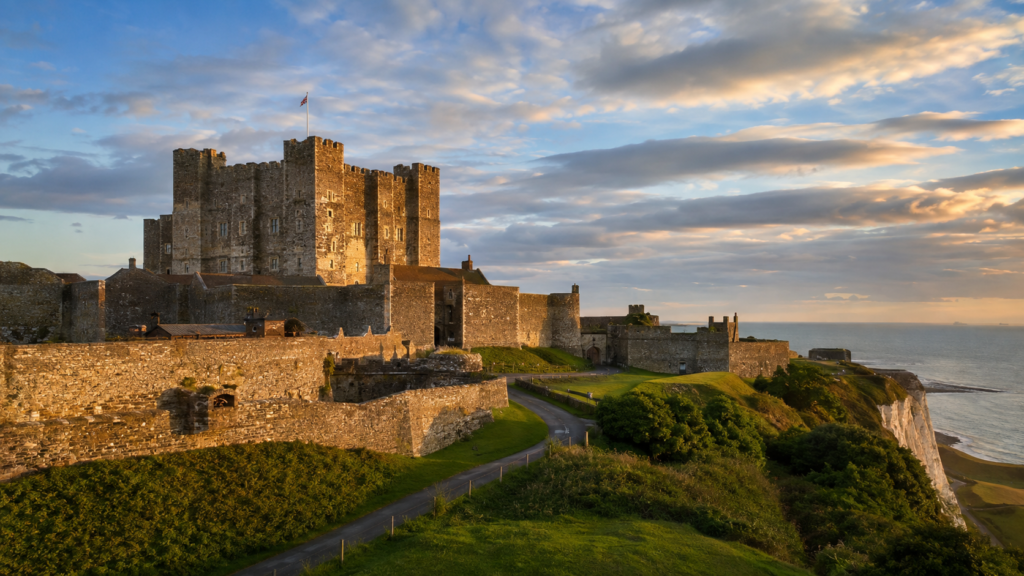
If you only visit one castle in Kent, make it Dover. Perched above the White Cliffs, Dover Castle has guarded the shortest crossing to the Continent since the 12th century, and it wears every era of its history proudly.
Don’t miss:
- The Great Tower — Henry II’s keep, recreated inside as it would have looked in the 1180s, complete with vividly painted royal chambers. Kids love it; so do adults who pretend they’re only there for the kids.
- The Secret Wartime Tunnels — carved into the chalk beneath the castle, these tunnels served as the command centre for the Dunkirk evacuation in 1940. The guided tour is genuinely moving.
- The Roman lighthouse — one of the oldest standing Roman structures in Britain, sitting quietly next to the Saxon church within the castle walls.
Practical bits: Dover Castle is run by English Heritage, so members go free. Allow a full day — this is a big site with a lot of walking. Wear proper shoes and bring layers; the wind off the Channel doesn’t care what month it is.
Camping nearby: There are several well-regarded sites in the countryside behind Dover and along the coast towards Deal and St Margaret’s Bay, putting you within easy reach of both Dover and Walmer castles.
2. Leeds Castle — ‘The Loveliest Castle in the World’
Yes, it’s in Kent, not Yorkshire — a point of endless confusion. Leeds Castle sits on two islands in a lake near Maidstone and has been called the loveliest castle in the world so often that the marketing team can be forgiven for leaning into it.
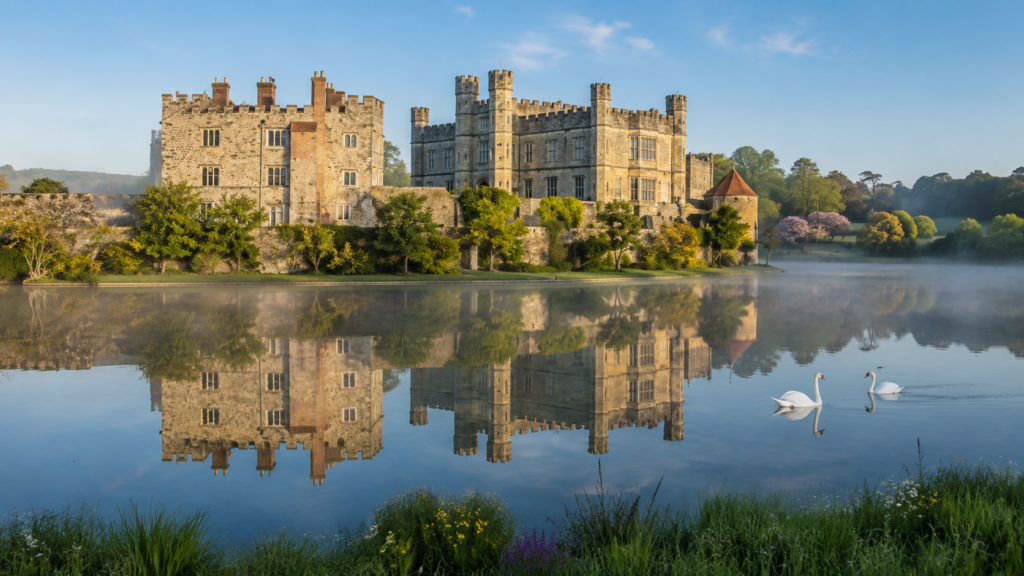
Once a Norman stronghold, then a royal palace beloved of medieval queens, and finally the country retreat of 1930s heiress Lady Baillie, Leeds is less a fortress and more a stately home with a moat that got carried away.
Don’t miss:
- The interiors, which reflect the castle’s glamorous 20th-century chapter as much as its medieval past
- The falconry displays — genuinely impressive
- The maze (with an underground grotto at the centre — brilliant with children)
- The grounds, which are vast and picnic-perfect
Practical bits: Tickets aren’t cheap, but they’re typically valid for a full year of return visits, which changes the maths considerably if you camp in Kent more than once a season. Check the current ticket terms before you go.
Camping nearby: The Maidstone and Ashford areas have a good spread of family-friendly campsites, and Leeds Castle itself has hosted glamping in the grounds in recent seasons — worth checking availability if you fancy waking up on castle turf.
3. Hever Castle — Anne Boleyn’s Childhood Home
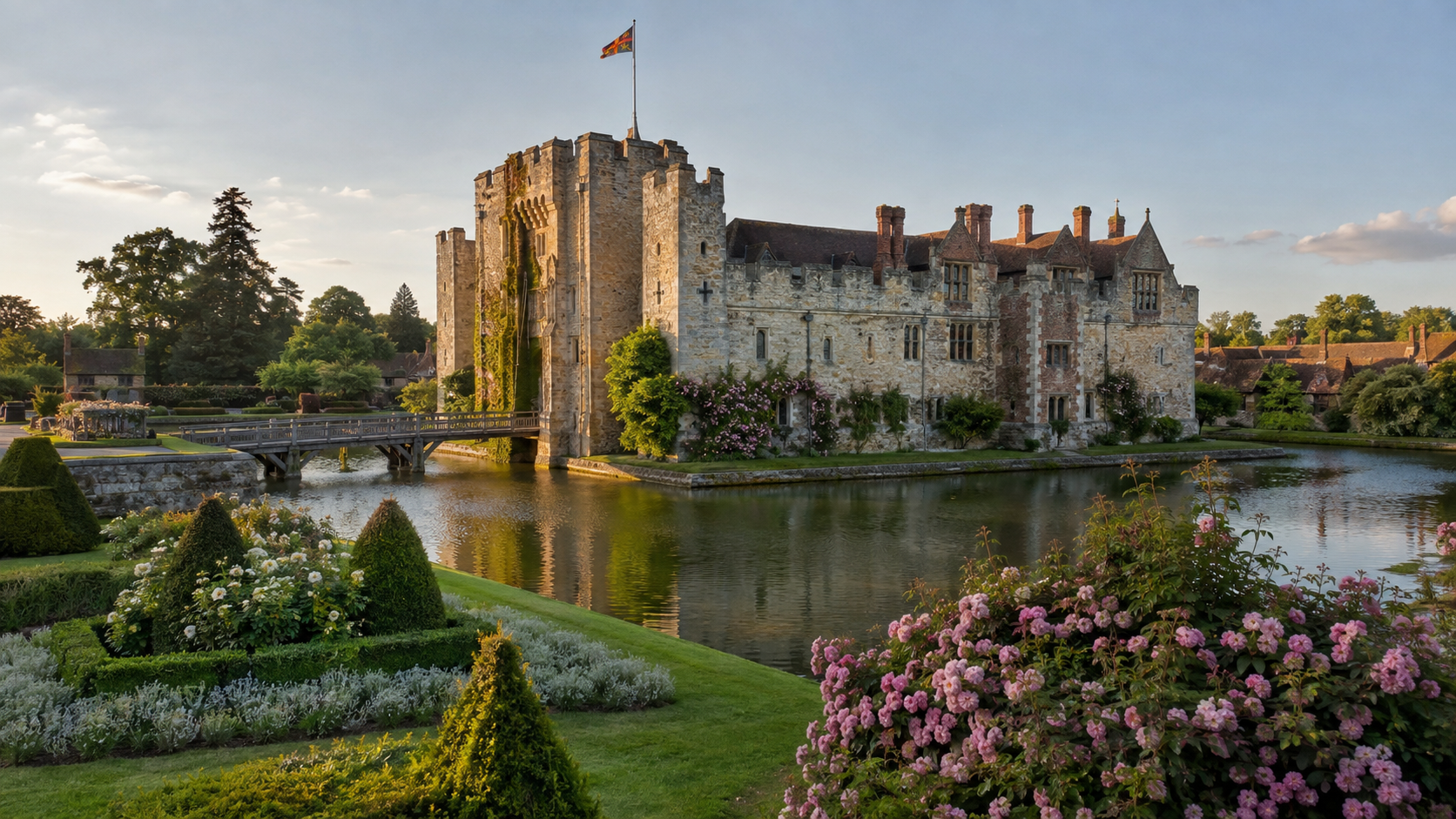
Hever is the romantic one. This double-moated, honey-stoned castle near Edenbridge was the childhood home of Anne Boleyn, and its story is inseparable from hers: Henry VIII courted her here, and the rest is very bloody history.
Rescued and restored in the early 1900s by William Waldorf Astor (then the richest man in America), Hever today is compact, atmospheric, and beautifully kept.
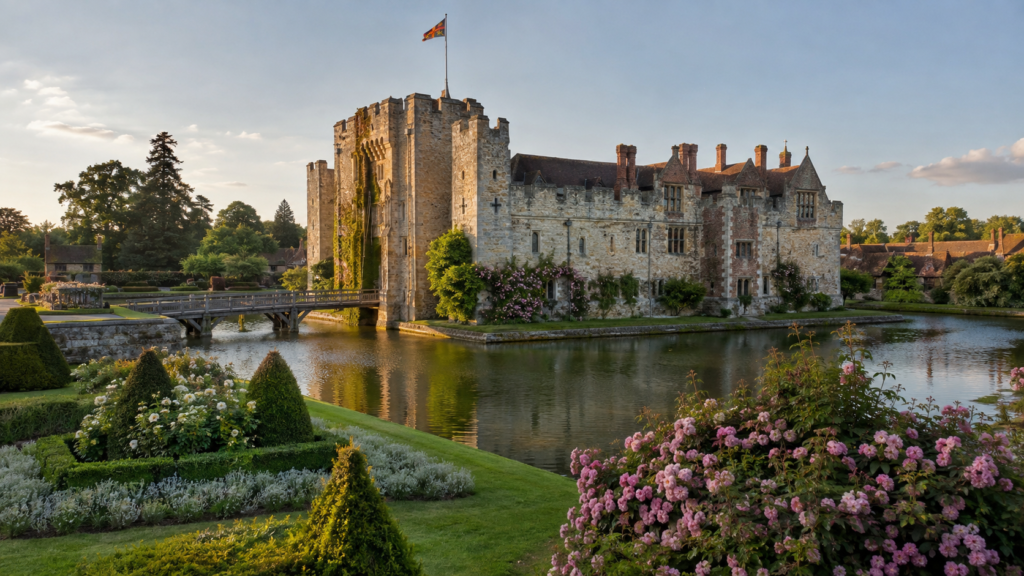
Don’t miss:
- Anne Boleyn’s prayer books, signed in her own hand — quietly haunting
- The Italian Garden, Astor’s showpiece, leading down to the lake
- The water maze — children get soaked, and they will love it
- The yew maze, planted over a century ago
Practical bits: Hever is smaller than Dover or Leeds, so half a day covers the castle itself — but the gardens deserve the other half. Summer sees jousting tournaments and open-air theatre; check the events calendar before booking your trip.
Camping nearby: The High Weald around Edenbridge and Tunbridge Wells is lovely camping country — rolling hills, quiet lanes, and proper countryside pubs. Hever also offers its own accommodation if the tent needs a night off.
4. Rochester Castle — The Mighty Keep
Rochester doesn’t do pretty. What it does is loom. The keep at Rochester Castle is one of the tallest surviving in England — a great slab of Norman power standing over the River Medway, right next to the second-oldest cathedral in the country.
The castle’s claim to fame is the siege of 1215, when King John’s forces famously brought down a corner of the keep by tunnelling beneath it and burning the props with the fat of forty pigs. The rebuilt round corner tower still doesn’t match the other three square ones — medieval history you can see with your own eyes.
Don’t miss:
- Climbing the keep — the views over the Medway are superb, and the open interior lets you appreciate just how vast this building is
- Rochester Cathedral, literally across the road
- Rochester’s Dickensian high street (the author lived nearby and set several novels here)
Practical bits: Rochester is a great half-day stop and cheaper than the big-ticket castles. Pair it with the historic dockyard at Chatham for a full day in the Medway towns.
Camping nearby: The North Downs south of the Medway towns offer several quiet rural sites within an easy drive.
5. Walmer Castle — Henry VIII’s Seaside Fortress
Walmer, near Deal, is one of Henry VIII’s ‘Device Forts’ — squat, round, Tudor artillery castles built in a hurry in 1539–40 when invasion from Catholic Europe looked imminent. Its sister castle at Deal is a mile up the beach; a third at Sandown has mostly been lost to the sea.
What makes Walmer special is its second life as the official residence of the Lords Warden of the Cinque Ports. The Duke of Wellington held the post and died here in 1852 — you can see the room, his armchair, and a pair of the original Wellington boots.
Don’t miss:
- The gardens, which are outstanding — including the Queen Mother’s Garden
- Wellington’s rooms, kept much as they were
- The walk along the shingle to Deal Castle, with a fish-and-chip stop in Deal itself
Practical bits: Another English Heritage property, so pairs perfectly with Dover Castle on a membership. Deal is one of Kent’s most underrated seaside towns — allow time to wander.
Camping nearby: Coastal sites between Deal and Sandwich put you on the doorstep, with the bonus of sea swims before breakfast if you’re brave.
6. Scotney Castle — The Prettiest Ruin in England?
Scotney, near Lamberhurst, is really two things: a Victorian country house on the hill, and below it, a ruined 14th-century moated castle that the Victorians deliberately kept as a romantic garden feature. The old castle, wrapped in wisteria and reflected in its lily-covered moat, is one of the most photographed views in Kent — and in autumn, when the trees turn, it’s ridiculous.
Don’t miss:
- The view of the old castle from the terrace — the classic shot
- The quarry garden in spring (rhododendrons) and autumn (colour everywhere)
- The wider estate walks through classic High Weald parkland
Practical bits: Scotney is a National Trust property, so it’s the free-entry counterweight for Trust members on a trip otherwise dominated by English Heritage sites.
Camping nearby: The Bewl Water area and surrounding Weald villages have some lovely small sites — this corner of Kent, on the Sussex border, is prime quiet-camping country.
Also worth your time
- Deal Castle — Walmer’s Tudor twin, with a wonderfully complete circular design you can explore top to bottom
- Tonbridge Castle — a fine motte-and-bailey gatehouse in the middle of town, with an engaging interactive tour
- Chiddingstone Castle — small, quirky, and home to a surprising collection of Japanese and Egyptian artefacts
- Lullingstone Castle — a Tudor manor with the fascinating ‘World Garden’ of plants, near the Roman villa of the same name
- Sissinghurst Castle Garden — more Elizabethan tower than fortress, but Vita Sackville-West’s legendary garden earns its place on any Kent itinerary
Planning your Kent castle trail
Kent’s compactness is its superpower. Here’s a simple three-day trail that works beautifully with a single campsite base near Ashford or Maidstone — or as a two-stop tour:
Day 1 — The East Coast: Dover Castle in the morning and early afternoon, then along the coast to Walmer for the gardens and a Deal fish supper.
Day 2 — The Heart of Kent: Leeds Castle for the full day (use those grounds for a proper picnic), or split the day between Rochester and Leeds if you’re keep-hungry.
Day 3 — The Weald: Hever in the morning, Scotney or Chiddingstone in the afternoon, and a slow drive home through the oast-house lanes.
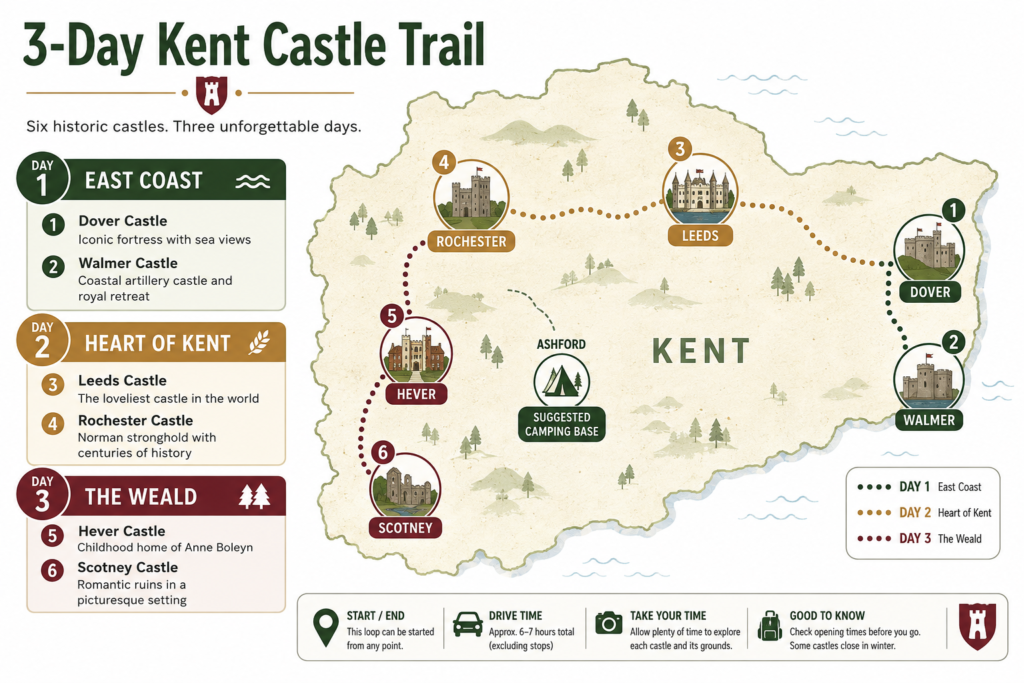
When to go: Kent’s castles are at their best from April to September, but Scotney in October is a special case worth breaking the rule for. School holidays bring crowds and event days (jousting at Hever, sieges at Dover) — decide whether that’s a feature or a bug for your crew and book accordingly.
Membership maths: If your trail includes Dover, Walmer, and Deal, an English Heritage membership may pay for itself in a single trip — especially for a family. Add National Trust membership if Scotney, Sissinghurst, and friends are on your list.
Camp your way through the Garden of England
This is exactly the kind of trip Campsites and Castles exists for: history by day, campfire by night, and a county generous enough to keep both close together. Kent’s mix of coast, countryside, and castle density makes it one of the best-value heritage camping destinations in the UK — no motorway marathons required.
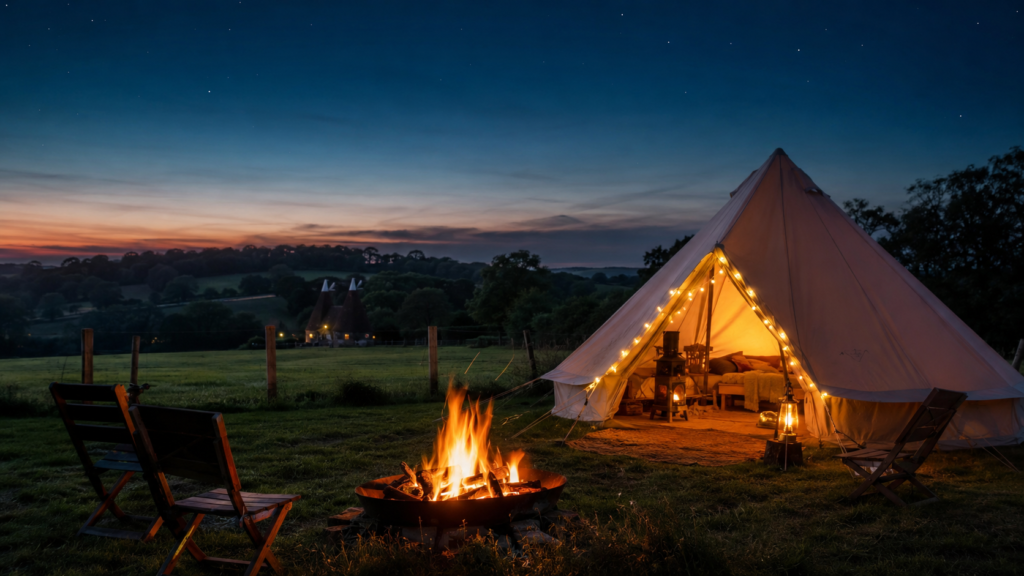
Planning a bigger adventure? Kent is just one stop on our Complete Guide to UK Castles — and if you want to sleep even closer to the history, our Ultimate Guide to Camping Near UK Castles covers the best pitches by region.
Have you explored Kent’s castles? Got a favourite campsite in the Garden of England? Let us know in the comments — we’re always looking for new pitches with a view of the past.