Best Castles in the Lake District and Cumbria
The Lake District gets all the attention for its fells and lakes — but Cumbria is also one of England’s great castle counties. For centuries this was frontier country, fought over by English and Scottish armies, which means the landscape is scattered with border fortresses, fortified pele towers, romantic ruins and grand stately castles that are still lived in today.
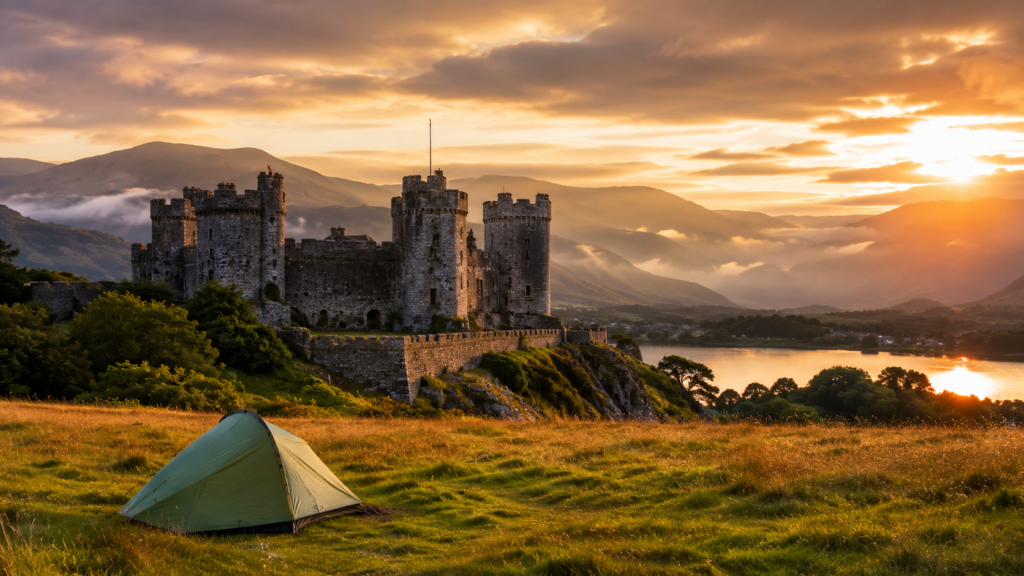
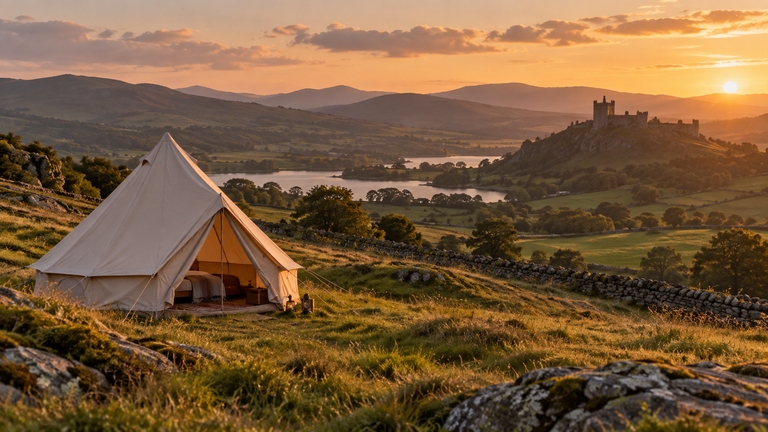
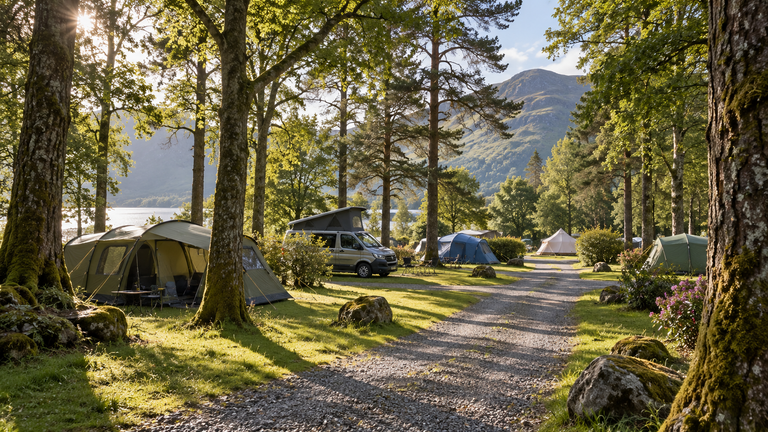
Even better for us: this is prime camping country. Almost every castle on this list has a good campsite within a short drive, which makes Cumbria one of the best places in the UK to camp your way through history. If you’re building a wider trip, our Complete Guide to UK Castles covers every region — but this post is your deep dive into the best castles in the Lake District and Cumbria.
Here are ten castles worth pitching a tent for.
1. Muncaster Castle — the haunted one
Tucked into the quiet western Lake District near Ravenglass, Muncaster is the castle I’d send you to first. It’s been home to the Pennington family for around 800 years, and it has everything: a lived-in historic house, glorious gardens with mountain views down the Esk valley, a hawk and owl centre with daily flying displays, and a serious reputation as one of Britain’s most haunted castles. The Tapestry Room is famous among ghost-hunters, and the castle leans into it with ghost tours and even overnight paranormal sits.
Camping nearby: Ravenglass is on the doorstep, with several campsites within ten minutes — and you can arrive by the miniature Ravenglass & Eskdale Railway, which children adore.
2. Carlisle Castle — 900 years of border warfare
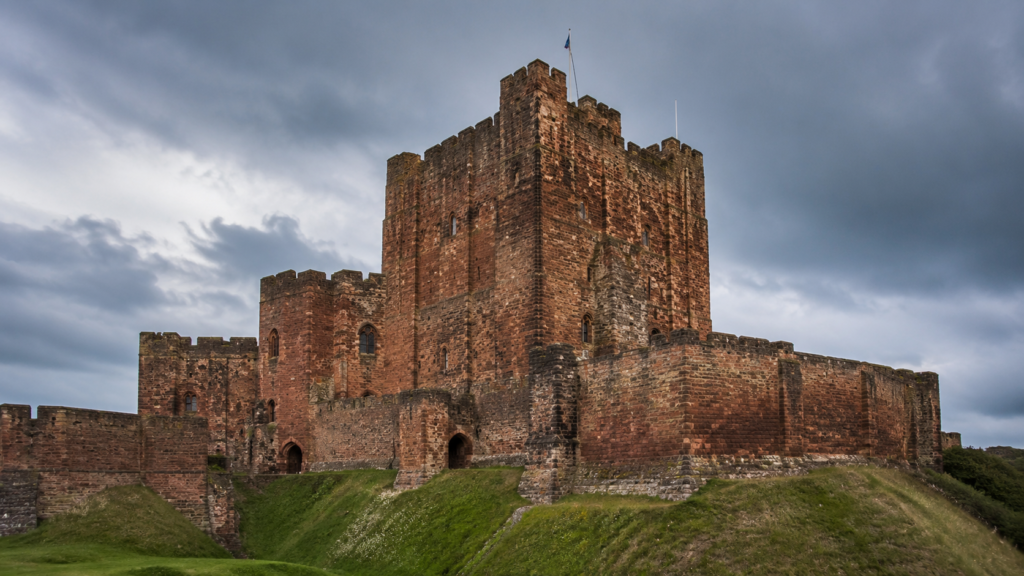
At the top of the county, guarding the border city, Carlisle Castle is the most fought-over fortress in England — besieged more times than any other castle in the country. It was founded by William II in 1092, imprisoned Mary, Queen of Scots in 1568, and held out through the Jacobite rising of 1745. It remained a working military base into the twentieth century, and today it’s run by English Heritage with a strong military museum inside.
Don’t miss the medieval carvings scratched into the keep walls by prisoners and guards — some of the most evocative graffiti anywhere in Britain.
Camping nearby: Sites around Dalston and the Eden valley put you within easy reach of both Carlisle and Hadrian’s Wall — pair this with our Roman Britain content for a brilliant weekend.
3. Sizergh Castle — the pele tower with the gardens
Just south of Kendal, Sizergh has been home to the Strickland family for more than 750 years and is now cared for by the National Trust. At its heart is a medieval pele tower — the classic Cumbrian defensive structure built against Scottish raids — wrapped in centuries of comfortable additions, including some of the finest Elizabethan carved wood panelling in the country. The limestone rock garden is a genuine highlight, and there’s a lovely café and estate walks.
Camping nearby: The southern Lakes around Kendal and Levens are full of family-friendly sites, and Sizergh even has a well-known campsite practically next door.
4. Lowther Castle — the romantic ruin reborn
Lowther, near Penrith, is unlike anywhere else on this list. The vast Gothic-revival castle was abandoned in the 1930s and deliberately reduced to a shell — and that’s exactly what makes it magical. Today you can wander through the roofless façade into 130 acres of restored gardens, and children get one of the best adventure playgrounds in the north: the Lost Castle, a huge timber fortress hidden in the woods.
If you’re camping with kids, make this your priority. You can easily fill a whole day here.
Camping nearby: The Eden valley and Ullswater are both within fifteen minutes, with campsites to suit every budget.
5. Wray Castle — the castle on Windermere’s shore
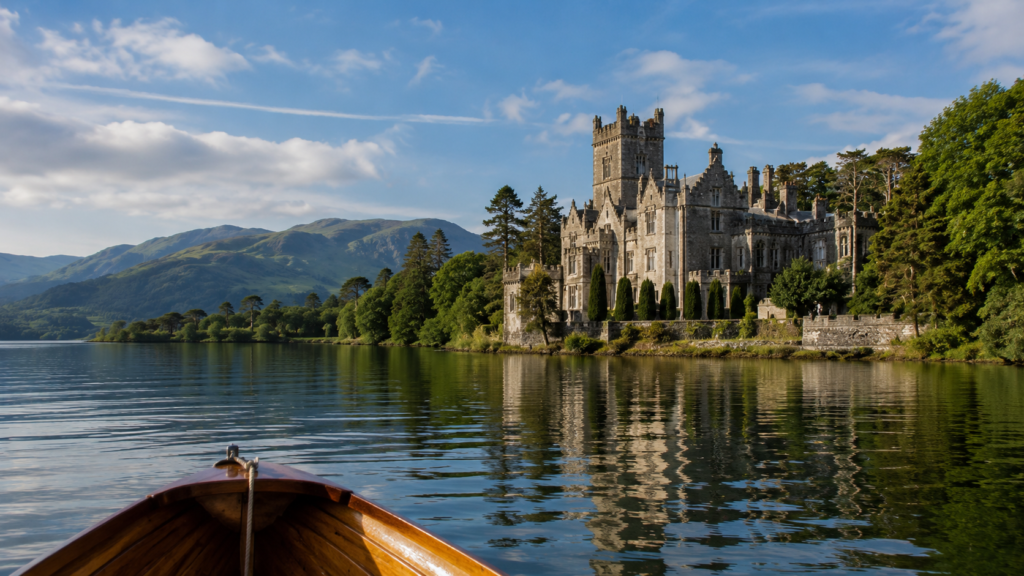
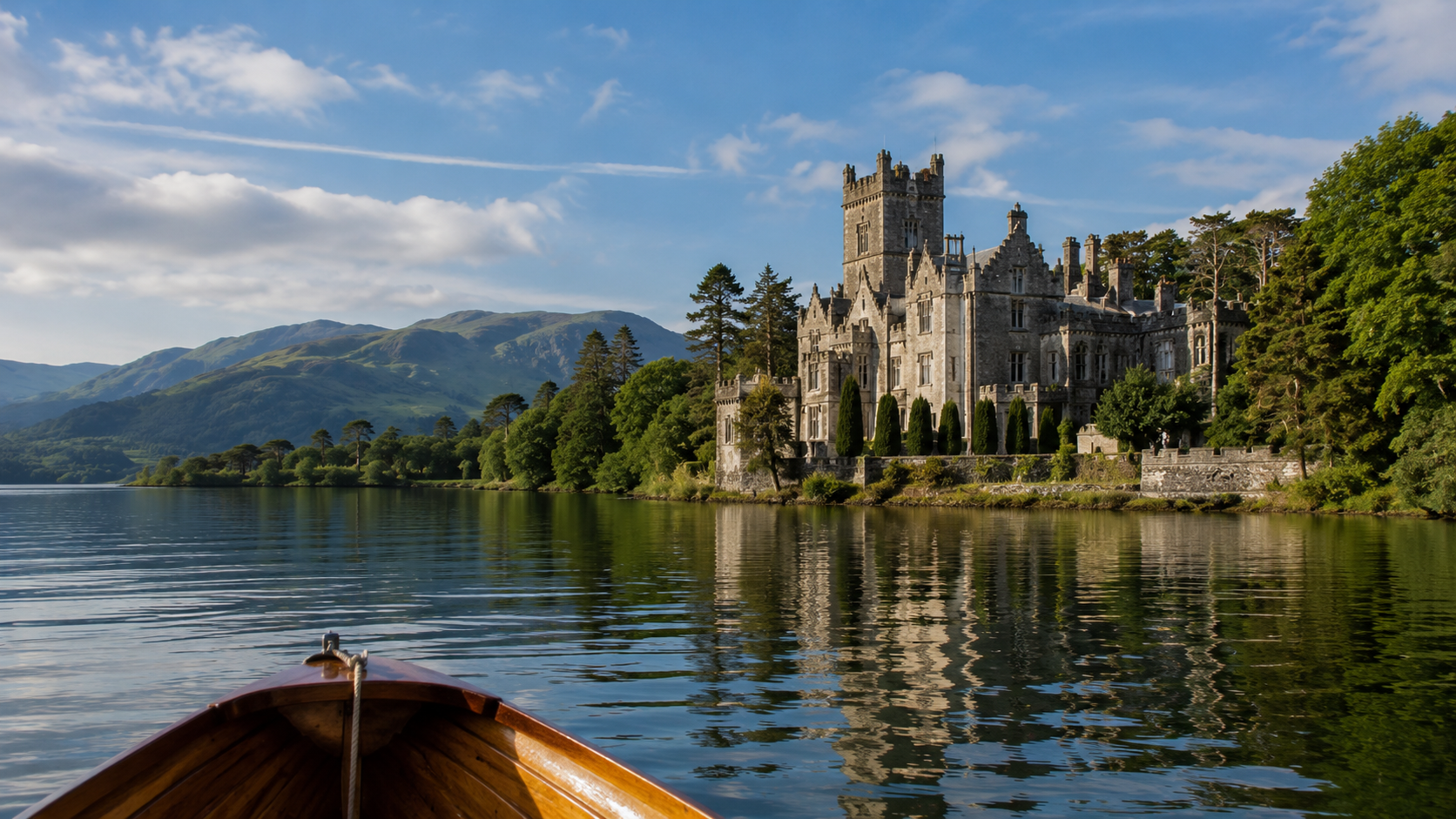
Wray isn’t a real fortress at all — it’s a Victorian mock-Gothic fantasy built in the 1840s on the western shore of Windermere — but it earns its place for the setting alone. It’s a National Trust property with a relaxed, family-first atmosphere, and it has a lovely claim to fame: a teenage Beatrix Potter stayed here on holiday, beginning her lifelong love affair with the Lake District.
The best way to arrive is by boat across Windermere from Bowness or Ambleside, which turns a castle visit into a proper adventure.
Camping nearby: You’re spoilt for choice — the campsites between Ambleside, Hawkshead and Coniston are some of the most popular in the national park, so book ahead in summer.
6. Brougham Castle — the riverside ruin
Sitting prettily beside the River Eamont near Penrith, Brougham is a proper medieval sandstone ruin built in the early 1200s on the site of a Roman fort. Its great champion was Lady Anne Clifford, the remarkable seventeenth-century noblewoman who restored her family’s castles across the north — she died here in 1676. It’s English Heritage, compact, and perfect for an hour or two with a picnic on the riverbank.
Camping nearby: Combine Brougham with Lowther and Penrith Castle for a brilliant castle-packed day from a single Eden valley basecamp.
7. Kendal Castle — the free one with the view
Kendal Castle is a ruin on a drumlin above the town, forever associated with the Parr family — the family of Katherine Parr, Henry VIII’s sixth and final wife. The walk up from town takes about fifteen minutes and rewards you with sweeping views over Kendal to the Lakeland fells. It’s completely free, open all the time, and one of the best sunset spots in the southern Lakes.
Camping nearby: Any southern Lakes site works — Kendal is the gateway town most campers pass through anyway.
8. Penrith Castle — Richard III’s northern base
Right opposite Penrith railway station, this red sandstone ruin was once a residence of Richard, Duke of Gloucester — the future Richard III — during his years running the north of England. It’s free to enter, sits in a public park, and takes half an hour to explore. Not a destination in itself, but an easy add-on to any Eden valley trip, and a good leg-stretch stop on the way up the M6.
9. Piel Castle — the one you reach by boat
This might be the most adventurous castle visit in England. Piel Castle sits on a tiny island off the Furness peninsula near Barrow, built in the fourteenth century by the monks of Furness Abbey to guard their harbour. You reach it by a small seasonal ferry from Roa Island, and the island’s pub landlord traditionally holds the title “King of Piel.” Check ferry sailings and tides before you go — that’s part of the fun.
Camping nearby: The Furness peninsula and southern coast are quieter than the central Lakes, which makes them great value in high season.
10. Brough Castle — the wild eastern outpost
Out in the Eden valley’s far east, where Cumbria meets the Pennines, Brough Castle stands on the earthworks of the Roman fort of Verterae. Like Brougham, it was restored by Lady Anne Clifford in the 1600s. It’s free, dramatic, usually near-deserted — and there’s a much-loved ice cream farm at the bottom of the hill, which is exactly the kind of intelligence camping families need.
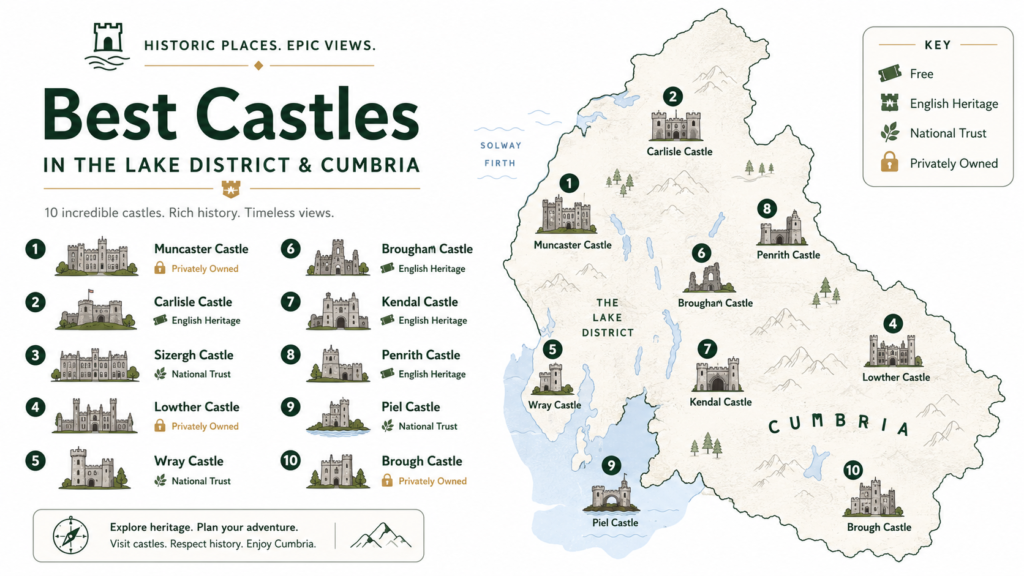
Planning your Cumbrian castle camping trip
A few practical tips from experience:
- Base yourself in one of two areas. The Eden valley (Penrith) puts Lowther, Brougham, Penrith, Brough and Carlisle within easy reach. The southern Lakes (Kendal/Windermere) covers Sizergh, Kendal, Wray and — with a scenic drive over the passes or round the coast — Muncaster and Piel.
- Mix free and paid. Kendal, Penrith and Brough cost nothing, so save your budget for Muncaster and Lowther, which justify a full day each.
- Membership pays here. With English Heritage sites (Carlisle, Brougham, Brough) and National Trust properties (Sizergh, Wray) on one list, an annual membership can pay for itself in a single week’s trip.
- Book campsites early for summer. The central Lakes fill up months ahead for school holidays; the Eden valley and west coast stay quieter.
- Check opening days. The privately owned castles and the Piel ferry run seasonal schedules — always check before you drive.
Final thoughts
Cumbria proves you don’t have to choose between a lakes-and-fells holiday and a history holiday. Border fortresses, haunted halls, island strongholds and romantic ruins are threaded right through the same landscape you’re camping in. Pick a basecamp, grab your boots, and you can walk through nine centuries of turbulent border history between breakfast and the evening campfire.
Exploring further afield? Head east to our guide to the Best Castles in Yorkshire, or north of the border with our Best Castles in Scotland — and for the full picture, start with The Complete Guide to UK Castles.
Have a favourite Cumbrian castle we’ve missed? Tell us in the comments — we’re always looking for an excuse to go back.