Medieval Reenactments at UK Castles: What to Expect
There’s a moment at every good castle event when the noise stops you in your tracks. Hooves thunder down the lists, a lance cracks against a shield, and a few thousand people gasp at once. That’s when you realise this isn’t a museum visit any more.
Medieval reenactments at UK castles are some of the best days out in British heritage. They’re loud, colourful, surprisingly educational and, if you plan it right, easy to turn into a full camping weekend. This guide covers what actually happens at these events, how to get the most from your day, and where to pitch your tent afterwards.
What is a medieval reenactment?
A reenactment is a live recreation of history by people who take it very seriously. Most reenactors belong to societies that research their period in detail, from how a 15th-century archer’s bracer was laced to what a Norman soldier ate before battle.
At castle events you’ll usually see three kinds of activity:
- Battle reenactments — large set-piece fights recreating a real historic battle, often on or near the original site.
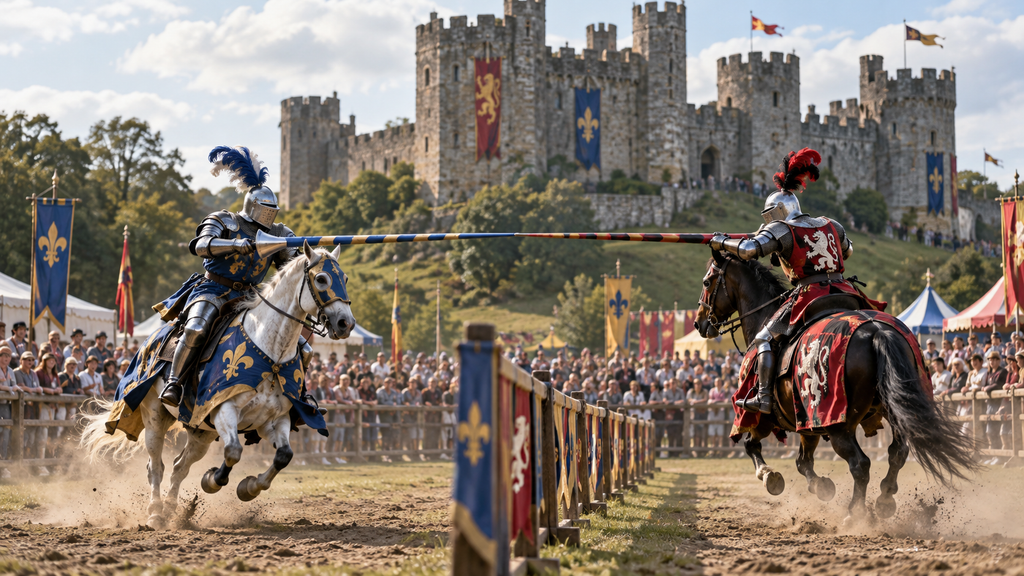
- Tournaments and jousts — knights on horseback competing for points, plus foot combat with swords, poleaxes and shields.
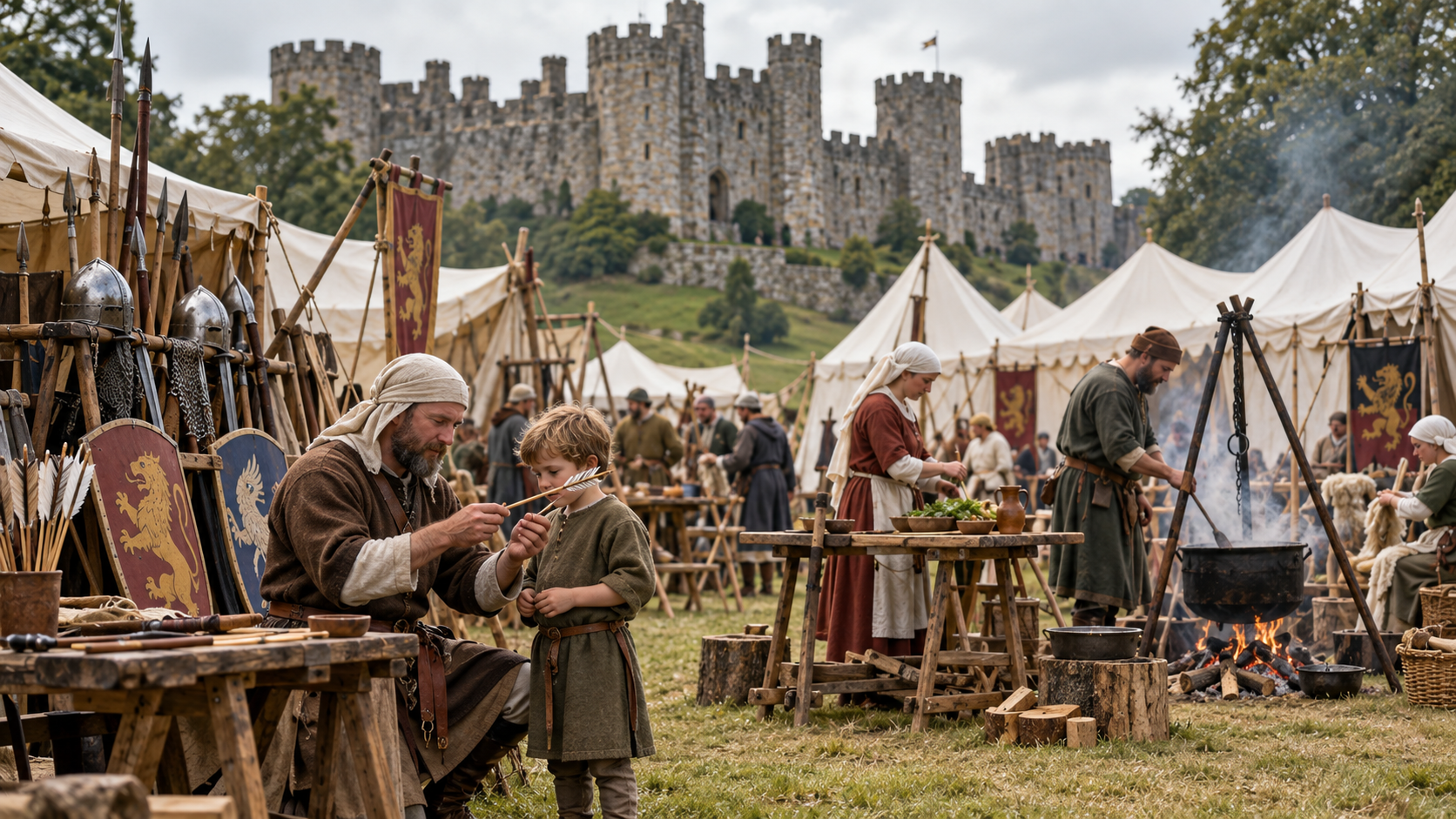
- Living history — encampments where reenactors cook, craft, mend armour and chat to visitors as if it were the 1400s.
The best events mix all three, so you can spend the morning wandering the camps and the afternoon cheering at the lists.
What to expect on the day
The living history encampment
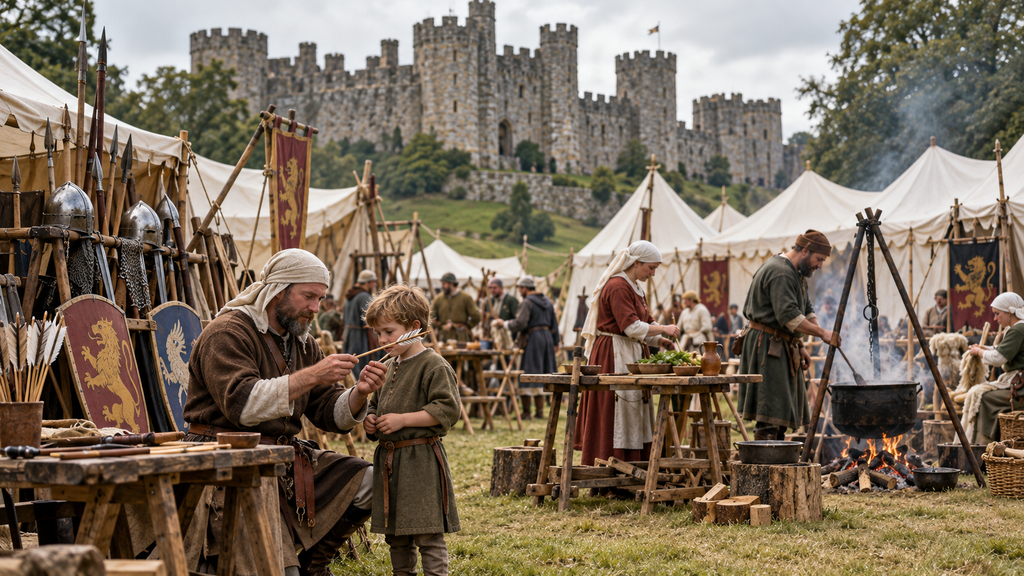
The encampment is the heart of most medieval reenactments at UK castles. Rows of canvas tents fill the grounds, with cooking fires, workbenches and wooden racks of weapons. Reenactors will happily explain what they’re doing, so ask questions.
Typical things you’ll see:
- Blacksmiths, fletchers (arrow makers) and leatherworkers at work
- Medieval cooking over open fires, often with period recipes
- Surgeons’ tables showing gruesome (and fascinating) battlefield medicine
- Armour being fitted, so you can see how a knight actually got dressed
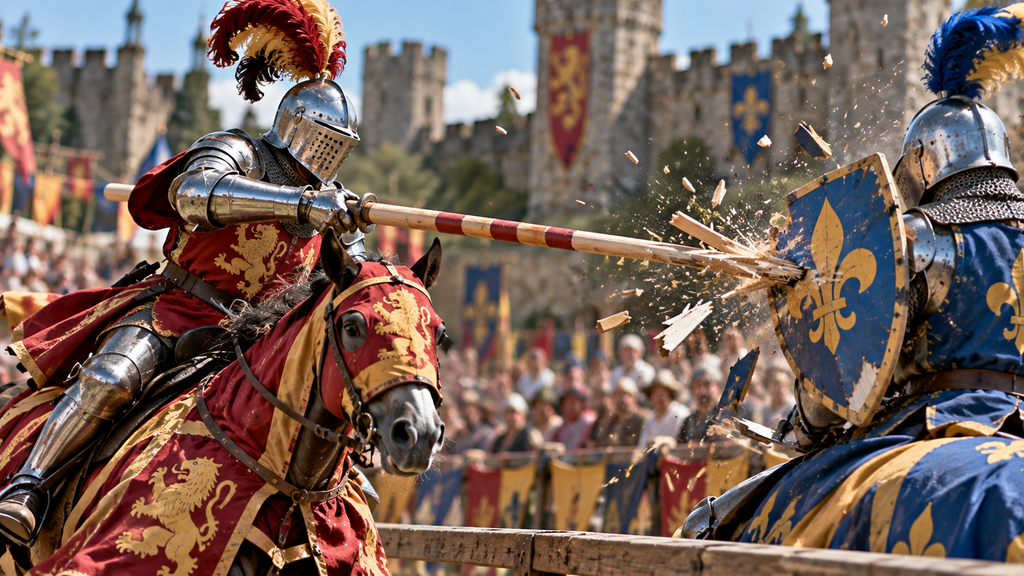
The joust or knights’ tournament
This is the headline act at many castles. English Heritage runs knights’ tournaments across the summer at sites such as Kenilworth, Warkworth, Pendennis, Carisbrooke, Bolsover and Framlingham, usually with a living encampment and falconry alongside (English Heritage).
Expect knights in full armour, a commentator who explains the scoring, and plenty of crowd participation. Children are often asked to cheer for a particular knight, which makes it brilliant for families.
The battle
Battle reenactments are the big crowd-pullers. The most famous is the Battle of Hastings at 1066 Battle Abbey and Battlefield in East Sussex, held on the weekend nearest 14 October on the site where Harold and William fought. The 2026 event runs on 10–11 October and features over 300 reenactors as Norman and Saxon armies (Visit 1066 Country).
Battles usually follow a script. A narrator sets the scene, the armies form up, archers loose volleys, and then the shield walls clash. They’re choreographed for safety, but the noise and pace feel real.
Displays and have-a-go activities
Around the main events you’ll often find falconry, archery displays, medieval music, storytelling and dressing-up corners. Some events let children try sword drills with wooden weapons or join a “squire school”.
Best castles for medieval reenactments in the UK
Events change every year, so always check the venue’s website before you travel. These are the reliable regulars.
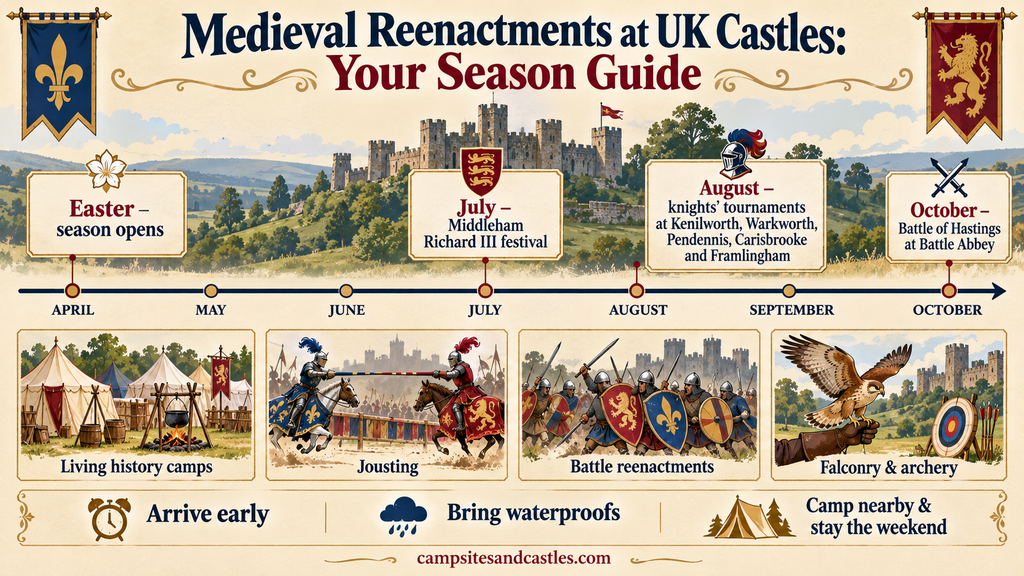
The 2026 dates came from English Heritage’s tournament listings, Hoop’s Middleham listing and Seven Swords’ 2026 calendar. Expect a similar pattern in 2027.
Outside castle walls, big town festivals such as Tewkesbury (July) and the Battle of Evesham (August) are worth the trip too, and both make easy add-ons to a castle weekend.
Tips for getting the most from your day
- Arrive at opening time. Car parks fill fast and the best spots by the arena go early.
- Check the timetable on arrival. Jousts and battles run at set times, often once or twice a day. Plan your camp wandering around them.
- Bring a picnic blanket or folding chairs. Most arenas are grass banks with no seating.
- Dress for British weather. Pack waterproofs and sun cream. October battles can be muddy, so wellies are wise.
- Bring cash. Some craft stalls and food vendors in the encampment don’t take cards.
- Book ahead. Advance tickets are often cheaper, and English Heritage members usually get in free.
- Be respectful in the camps. Don’t touch weapons or kit without asking, and keep dogs on short leads near horses.
Are castle reenactments good for kids?
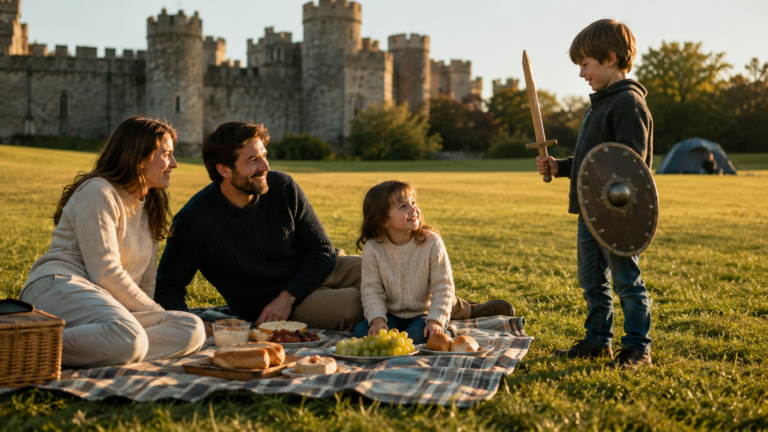
Yes — they’re one of the best ways to make history stick. Children remember the smell of the cooking fire and the crash of armour far better than a date in a textbook. Most English Heritage castle events are designed with families in mind, with trails, dressing up and hands-on activities.
A few things to know. Battles can be loud, so ear defenders help with younger children or anyone sensitive to noise. Some displays, like battlefield surgery, can be graphic, so give little ones a heads-up. And keep an eye on small children near the arena barriers when horses are running.
For more ideas, see our guide to the Best Castles for Kids in the UK.
Turn it into a camping weekend
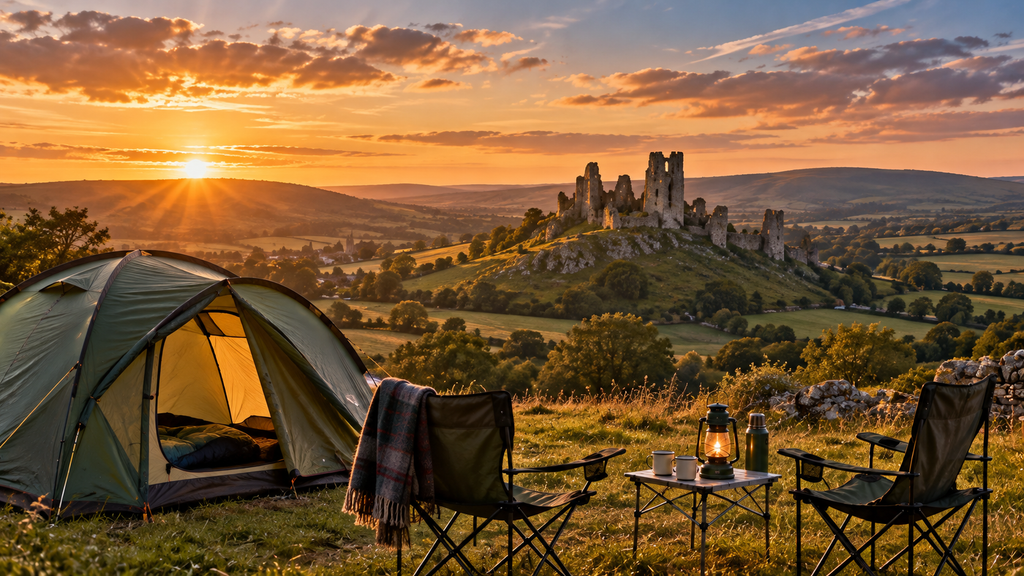
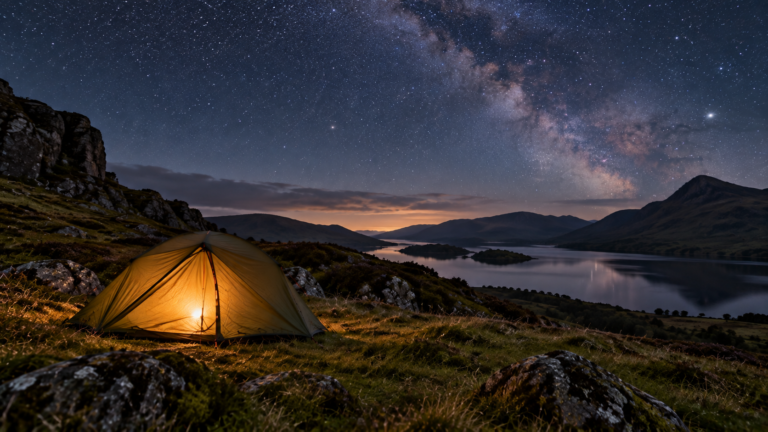
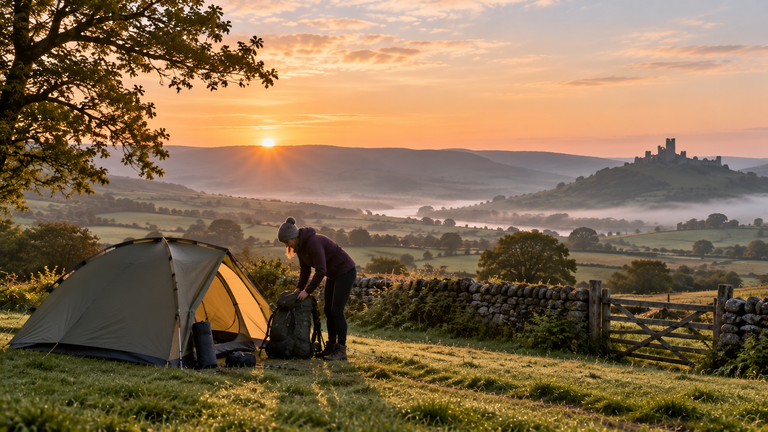
This is where Campsites and Castles comes in. Most reenactments run across a weekend, so camping nearby means you can watch both days, avoid the morning traffic and enjoy the evening when the crowds have gone.
Some ideas to get you started:
- Kenilworth — pair the tournament with a visit to Warwick Castle. See our guide to the [Best Campsites Near Warwick Castle].
- Warkworth — make it a Northumberland coast trip with Bamburgh and Alnwick. See [Camping Near Bamburgh Castle].
- Battle Abbey — camp in the High Weald and add Bodiam Castle, a 20-minute drive away.
- Pendennis — combine it with a Cornish coastal break and St Mawes Castle across the water.
Book early for bank holiday weekends — campsites near popular events fill weeks ahead.
Our Ultimate Guide to Camping Near UK Castles lists campsites by region.
Frequently asked questions
When is reenactment season in the UK? Most castle reenactments run from Easter to October, peaking in July and August. The season traditionally closes with the Battle of Hastings in mid October.
How much do castle reenactment events cost? Most are included in the normal admission price for the castle. English Heritage members usually go free, and booking online in advance is often cheaper.
Can I take part in a reenactment? Yes. Most reenactment societies welcome new members and lend kit to beginners. Chat to reenactors at an event — they’re usually delighted to recruit.
Are dogs allowed at castle reenactment events? It varies by venue. Many English Heritage sites allow dogs on leads in the grounds, but check before you go, especially for events with horses.
What should I wear? Comfortable walking shoes and layers. You’re on grass all day, and castle sites are often exposed to the wind.
Final thoughts
Medieval reenactments at UK castles bring old stones back to life in a way no guidebook can. Whether it’s a joust on a summer afternoon or a shield wall on a cold October hillside, you’ll come away knowing more about history than you expected — and probably planning your next trip.
Pitch up nearby, make a weekend of it, and let us know which event you’re heading to in the comments.