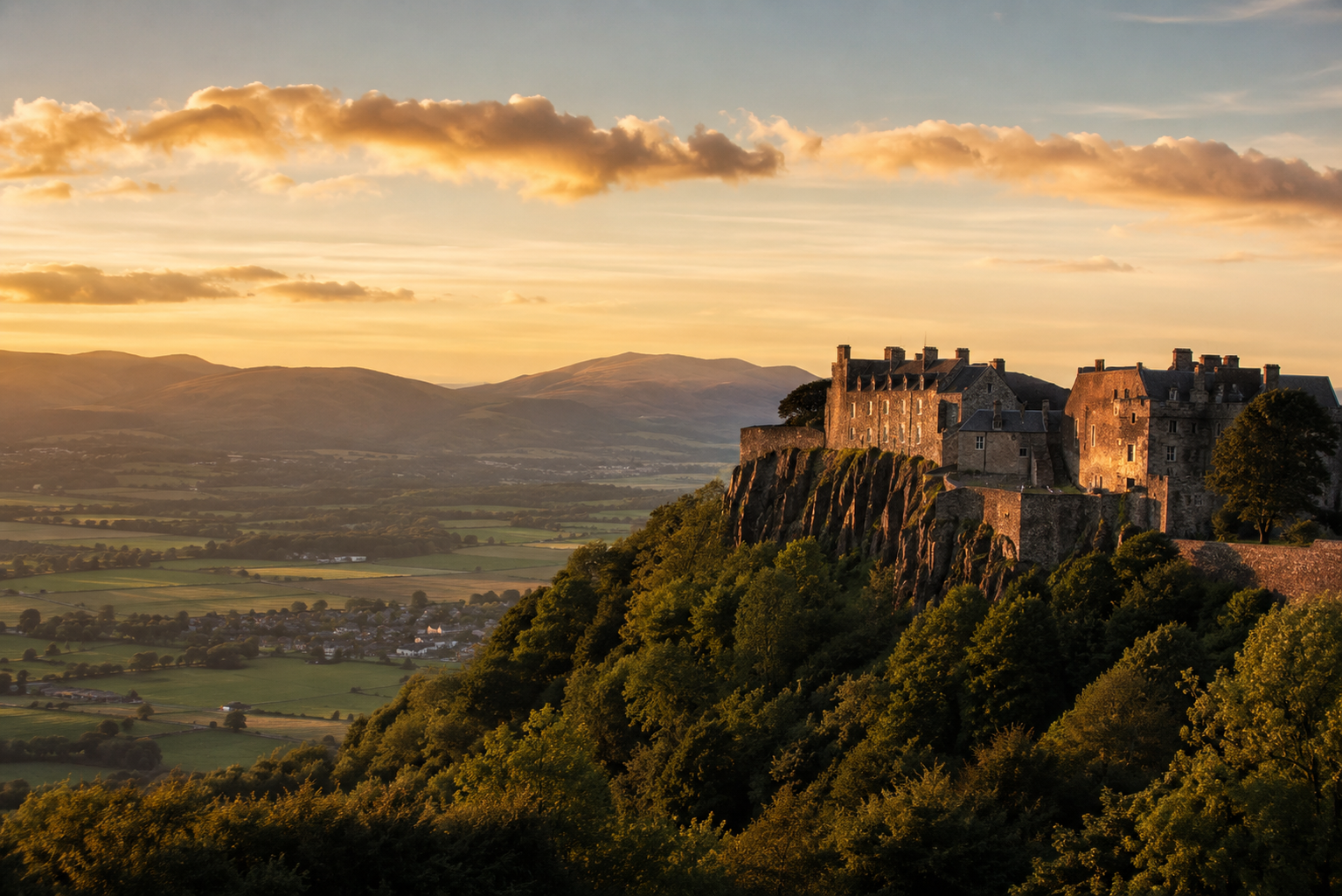
The Complete Guide to UK Castles
Britain is a country built on castles. Literally. From the windswept cliffs of Northumberland to the mist-draped lochs of the Scottish Highlands, from the dramatic coastline of Wales to the rolling green of the Irish hills, there is barely a region of the UK that doesn’t have a castle — or the ruins of one — watching over it.
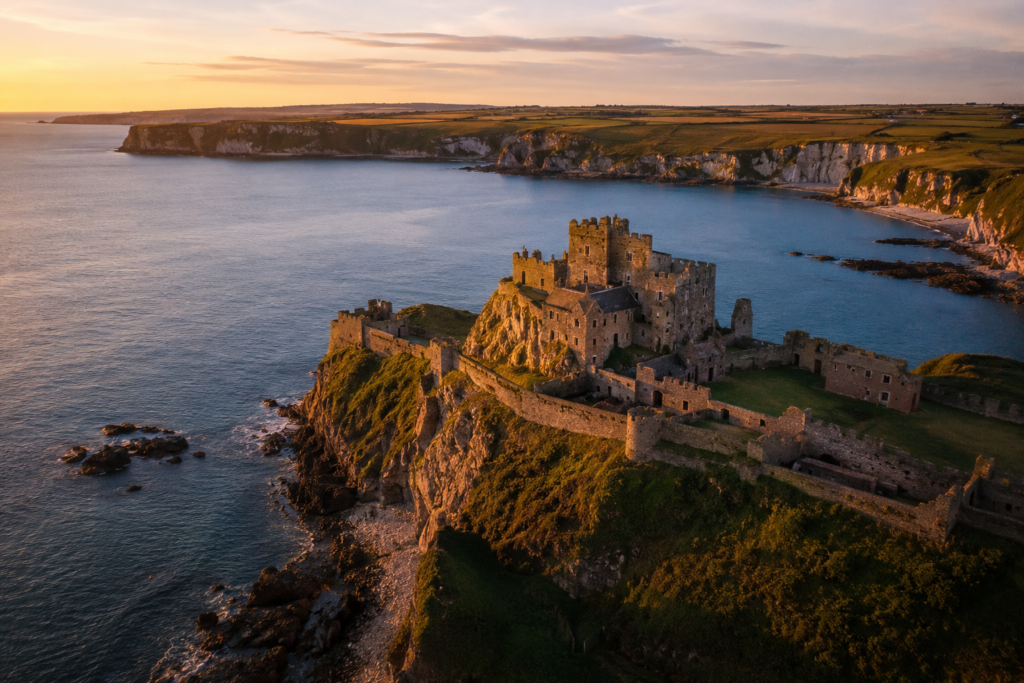
But knowing where to start when you want to explore them? That’s where it gets overwhelming. The UK has over 1,500 castles open to visitors in various states of repair, each with its own history, its own atmosphere, and its own reason to make the journey.
This guide is your complete starting point. We’ve broken the UK down into its four nations — England, Scotland, Wales, and Northern Ireland — with the best castles in each region, what makes them special, and practical tips for visiting. Whether you’re planning a full heritage road trip or just looking for a great day out near your campsite, this is the guide to bookmark.
| 🏕️ Planning to camp near a castle? Check out our companion guide: The Ultimate Guide to Camping Near UK Castles — your full region-by-region directory of the best campsites near historic sites across Britain. |
At a Glance: UK Castles by Nation
| Nation | Highlights | Best For |
|---|---|---|
| England | Windsor, Warwick, Bamburgh, Leeds, Alnwick | Royal history, families, manicured grounds |
| Scotland | Edinburgh, Stirling, Eilean Donan, Dunnottar | Dramatic landscapes, clan history, wild settings |
| Wales | Caernarfon, Conwy, Harlech, Beaumaris, Raglan | Edward I’s ring of fortresses, coastal drama |
| Northern Ireland | Dunluce, Carrickfergus, Belleek, Enniskillen | Game of Thrones filming, Norman history, coast |
🏴 England’s Greatest Castles
England has more castles than any other UK nation, spread across counties that range from the wild northern borders to the gentle Home Counties. Here’s how to navigate them by region.
The North: Northumberland & the North East
If you only visit one region for castle-hunting, make it Northumberland. This county has the highest density of castles anywhere in England — a legacy of centuries of conflict with Scotland — and the landscape to match. Broad beaches, open moorland, and skies that seem to go on forever.
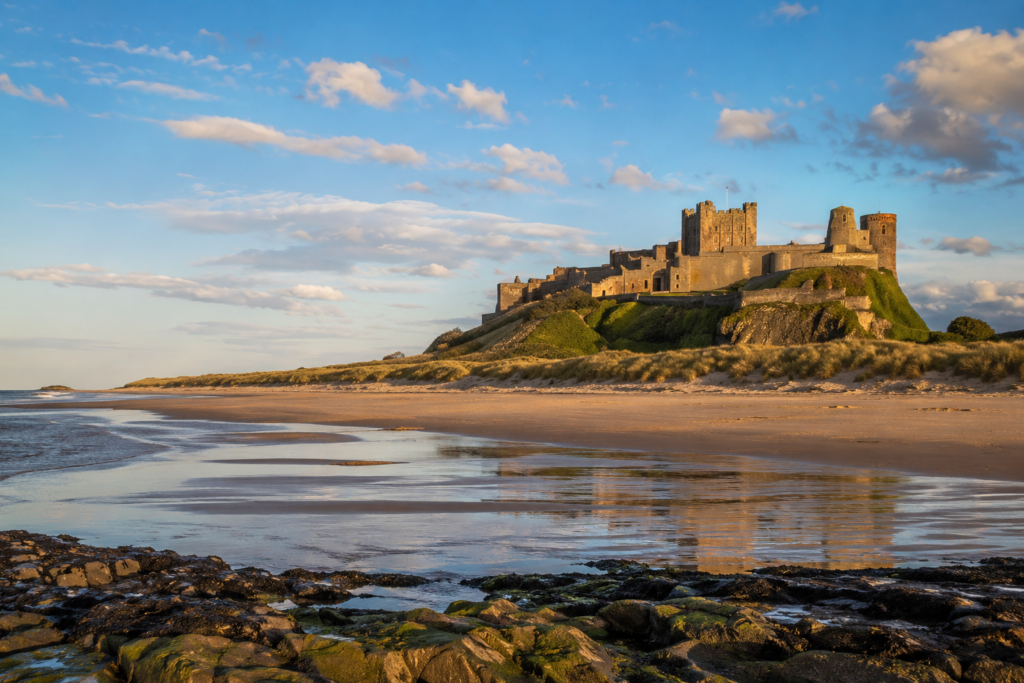
- Bamburgh Castle — Arguably England’s most dramatic castle, sitting on a basalt crag above one of the UK’s finest beaches. The great hall and armoury are impressive, but it’s the view from the grounds that will stay with you. There are excellent campsites nearby.
- Alnwick Castle — Known to millions as Hogwarts in the Harry Potter films, Alnwick is also the home of the Duke of Northumberland and one of England’s most lived-in historic fortresses. The gardens next door are world-class.
- Warkworth Castle — A ruined but evocative Percy family stronghold on the banks of the River Coquet. Far less visited than Bamburgh or Alnwick, which makes it a pleasure.
- Dunstanburgh Castle — Accessible only on foot (about a mile each way from Craster village), this ruin on the coast rewards the walk with one of the most atmospheric settings in England.
| 📍 Camping Nearby: Read our guide to the Best Campsites Near Bamburgh Castle for the top spots to pitch within striking distance of Northumberland’s finest. |
Yorkshire & the North Midlands
Yorkshire is England’s largest county, and it punches well above its weight on castle heritage. From the dramatic ruins of Scarborough on the coast to the brooding grandeur of Bolton Castle in the Dales, the county has something for every kind of castle enthusiast.
- Bolton Castle — Set in Wensleydale, this well-preserved 14th-century fortress is where Mary Queen of Scots was imprisoned in 1568. The views across the Dales from the battlements are extraordinary.
- Skipton Castle — One of the best-preserved medieval castles in England, with a full roof and largely intact towers. The Tudor courtyard is a particular highlight. Very family-friendly.
- Scarborough Castle — A clifftop ruin with sweeping views over the North Sea. The ruined great tower dates from Henry II’s reign. English Heritage manages the site.
- Richmond Castle — Perched above the River Swale, Richmond has one of the earliest surviving Norman keeps in England. The town around it is equally charming.
- Middleham Castle — In the heart of the Dales, this was Richard III’s childhood home. The keep is the second largest in England after the Tower of London.
The Heart of England: The Midlands
The Midlands might not be the first region that springs to mind for castle tourism, but it contains some of England’s most historically significant fortresses — including one of the most famous in the world.
- Warwick Castle — One of England’s most complete medieval castles, now run as a major heritage attraction with daily shows, trebuchet demonstrations, and immersive experiences. Brilliant for families.
- Kenilworth Castle — A vast Elizabethan ruin in Warwickshire with a long history of royal connections. Elizabeth I received her most extravagant entertainments here. English Heritage managed.
- Ludlow Castle — On the border with Wales, this ruined castle offers great views over the town and surrounding countryside. Ludlow itself is one of England’s finest medieval market towns.
The South: Kent, the Home Counties & the Coast
Southern England’s castle landscape tells the story of invasion and defence — from the Norman castles of Kent (the ‘Gateway to England’) to Henry VIII’s coastal artillery forts protecting the Channel.
- Leeds Castle, Kent — Often called ‘the loveliest castle in the world’, Leeds Castle sits on two islands in a lake and is surrounded by 500 acres of grounds. Hugely popular — book ahead.
- Dover Castle — England’s most iconic defensive fortress, with a history stretching from the Iron Age to the Second World War. The medieval tunnels are fascinating. English Heritage.
- Windsor Castle — The oldest and largest occupied castle in the world, and an official residence of the monarch. The State Apartments are open when the Royal Family isn’t in residence.
- Bodiam Castle — A picture-perfect 14th-century moated castle in East Sussex, managed by the National Trust. The silhouette reflected in the moat is one of England’s most photographed images.
- Portchester Castle — The best-preserved Roman walls in northern Europe, with a Norman castle built inside them. Just outside Portsmouth, and free to enter.
🏴 Scotland’s Most Spectacular Castles
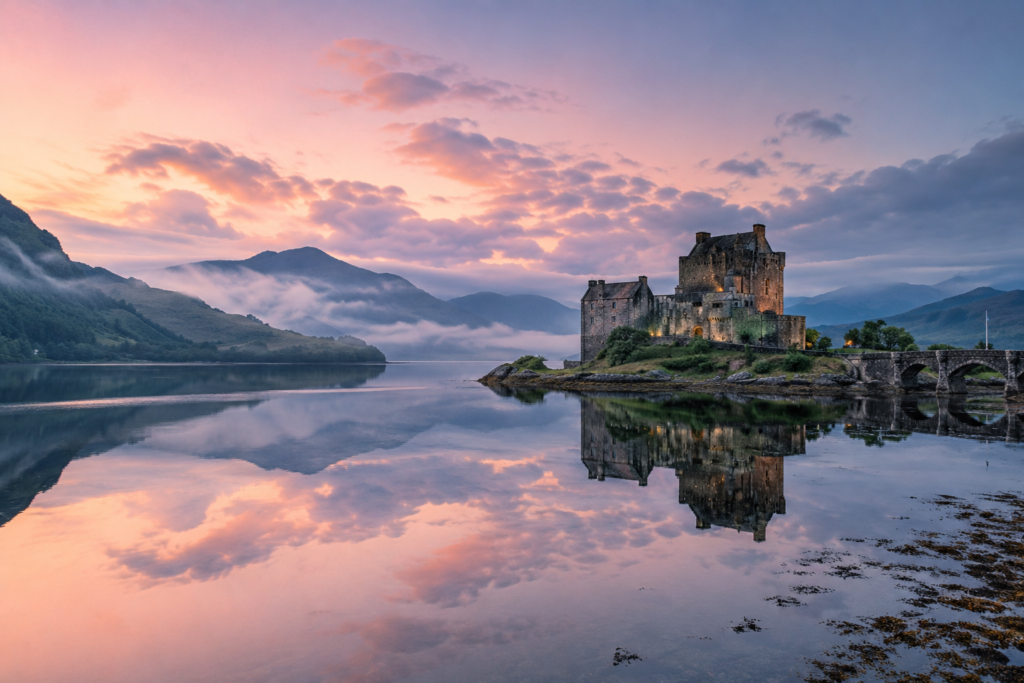
Scotland’s castles are a breed apart. Where English castles tend toward the grand and the well-manicured, Scottish castles often feel genuinely wild — perched on sea stacks, reflected in lochs, or standing defiant in landscapes that haven’t changed much since they were built. Scotland has over 3,000 castle sites, more per square mile than almost anywhere in the world.
Edinburgh & the Central Belt
- Edinburgh Castle — Sitting on an ancient volcanic rock above the city, Edinburgh Castle is Scotland’s most visited paid attraction. The Scottish Crown Jewels, the Stone of Destiny, and the Great Hall are all unmissable. Book tickets in advance.
- Stirling Castle — Edinburgh’s rival for grandeur, Stirling was the favourite residence of the Scottish royal court. The restored Great Hall and the Royal Palace interiors are exceptional. The Wallace Monument is visible from the esplanade.
- Doune Castle — A remarkably well-preserved 14th-century castle used as a filming location for Monty Python and the Holy Grail, Outlander, and Game of Thrones. The audio tour is narrated by cast members.
- Blackness Castle — On the shore of the Firth of Forth, this distinctive ‘ship that never sailed’ fortress has appeared in Outlander and was a state prison for centuries.
The Highlands & Islands
This is where Scottish castle tourism reaches its most dramatic. The combination of ancient fortresses and world-class scenery makes the Highlands a destination like no other. Wild camping is legal in Scotland under the Land Reform Act, making this a perfect destination for heritage campers.
- Eilean Donan Castle — The most photographed castle in Scotland, sitting at the meeting point of three sea lochs near Dornie. The setting — mountains, water, causeway — is genuinely extraordinary. More than just a photo opportunity, the interior is fascinating too.
- Dunvegan Castle, Skye — The oldest continuously inhabited castle in Scotland, home to the Clan MacLeod for 800 years. The grounds include seal colony boat trips.
- Urquhart Castle — The ruins overlooking Loch Ness are among Scotland’s most evocative. A visitor centre does justice to the site’s long history, and yes, you might glimpse something in the water.
- Dunnottar Castle — On a sea stack 160 feet above the North Sea near Stonehaven, Dunnottar is where the Scottish Crown Jewels were hidden from Cromwell’s army. The walk down to the castle and up to the entrance is dramatic in every season.
- Castle Stalker, Argyll — A compact tower house on a tidal islet in Loch Laich. The only way to visit is on a private guided boat trip — worth planning ahead. Famously appeared in Monty Python and the Holy Grail.
| 🏕️ Wild camping near Scottish castles is legal and rewarding — read our Scottish Wild Camping Legal Guide for everything you need to know before you pitch. |
Aberdeenshire: Scotland’s Castle Country
Aberdeenshire has a higher concentration of castles than any other part of Scotland — over 300 of them within the county’s boundaries. Many are on the Aberdeenshire Castle Trail, a self-guided driving route connecting the region’s finest fortresses.
- Craigievar Castle — A fairytale pink tower house with no external buttresses, rising seven storeys from the Aberdeenshire countryside. The inspiration, it’s often claimed, for Disney’s Sleeping Beauty castle. National Trust for Scotland.
- Crathes Castle — Turreted, colourful, and surrounded by magnificent walled gardens, Crathes is one of the finest tower houses in Scotland. The painted ceilings inside are rare survivals.
- Balmoral Castle — The Scottish home of the Royal Family since Queen Victoria’s time. The grounds and exhibitions are open to visitors in spring and early summer when the family is not in residence.
- Kildrummy Castle — A ruined but substantial 13th-century castle that was once the most important fortress in the north of Scotland. Now managed by Historic Environment Scotland.
🏴 Wales: Europe’s Greatest Concentration of Castles
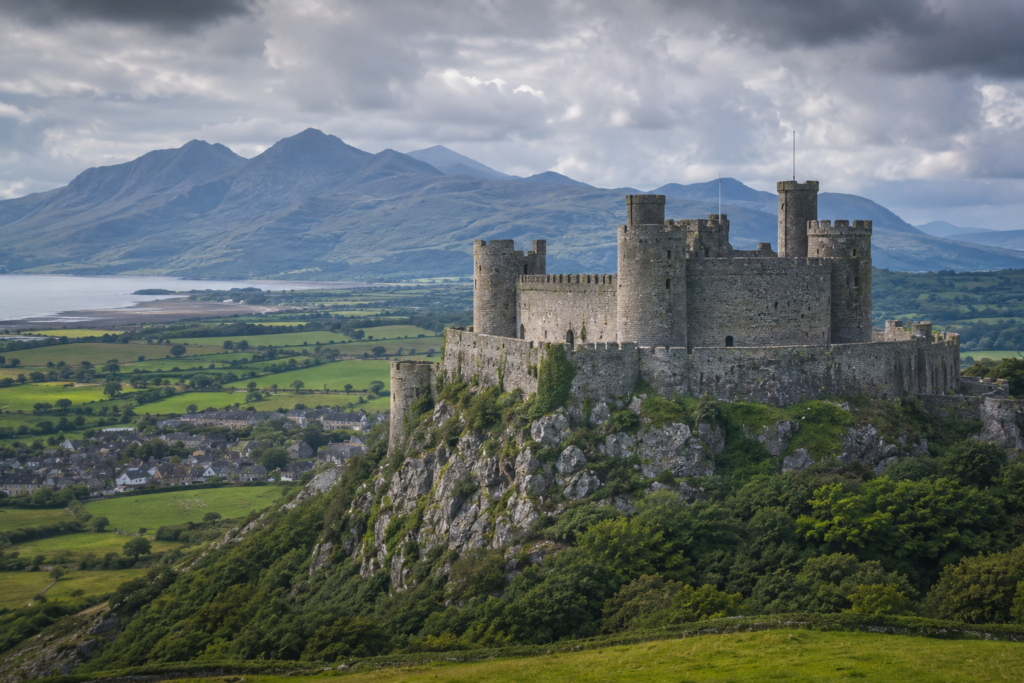
Wales has the highest density of castles of any country in the world — over 600 of them, many built or strengthened by Edward I of England as part of his campaign to subdue the Welsh princes in the late 13th century. These Edwardian fortresses are now a UNESCO World Heritage Site, and they remain among the most impressive medieval military architecture anywhere in Europe.
Edward I’s Ring of Iron: North Wales
The four great Edwardian castles of North Wales — Caernarfon, Conwy, Harlech, and Beaumaris — form a UNESCO World Heritage Site. They were built as part of a coordinated military strategy and are still awe-inspiring in scale and ambition.
- Caernarfon Castle — The mightiest of the Welsh castles and the birthplace of the first English Prince of Wales. The Eagle Tower is the tallest surviving tower from the medieval period in Wales. Cadw managed.
- Conwy Castle — Built in just four years in the 1280s, Conwy Castle and its town walls are a remarkable feat of medieval engineering. The walls are still largely intact and walkable.
- Harlech Castle — Perched on a crag above Tremadog Bay, Harlech is the inspiration for the song Men of Harlech and one of the most dramatically sited castles in Britain.
- Beaumaris Castle — Often described as the most technically perfect castle in Britain, Beaumaris was never fully completed but the concentric design is a masterclass in medieval military architecture. It sits quietly on the Menai Strait on Anglesey.
| 📍 Camping Nearby: Read our guide to the Best Campsites Near Caernarfon Castle for top pitches in Snowdonia and on the Llŷn Peninsula. |
South Wales & the Welsh Marches
South Wales offers a different castle landscape — bigger, more ruined, and often more atmospheric. Many of these castles were built by the Norman lords who carved out territories in the March, the contested borderland between England and Wales.
- Caerphilly Castle — The largest castle in Wales and the second largest in Britain after Windsor. The leaning tower (damaged by Civil War cannon fire) and the lake defences are extraordinary. Cadw managed.
- Raglan Castle — The most impressive castle ruin in Wales and one of the most romantic. The Great Tower stands to nearly full height, and the gatehouse complex is vast. Worth spending two hours here.
- Chepstow Castle — Built immediately after the Norman Conquest, Chepstow is the oldest surviving post-Roman stone fortification in Britain. It sits dramatically above the River Wye.
- Pembroke Castle — The birthplace of Henry VII and the founder of the Tudor dynasty. The circular great keep is one of the finest in Wales. Pembrokeshire’s coastline around it is spectacular.
- Carreg Cennen Castle — A ruined castle on a sheer limestone crag in the Brecon Beacons, with a cave passage beneath it. The most dramatically sited castle in South Wales and one of the most haunting in Britain.
🇬🇧 Northern Ireland’s Castles & Coastal Fortresses
Northern Ireland’s castle landscape reflects the province’s complex history — Norman fortresses on the coast, Plantation-era tower houses across the countryside, and the dramatic coastal scenery that brought Game of Thrones to film here for a decade. Many of the most striking locations are free to access and relatively uncrowded.
The Causeway Coast & Antrim
- Dunluce Castle — A dramatic ruin on a sea stack on the Antrim coast, accessible via a bridge. Part of it fell into the sea in 1639, reportedly taking the kitchen with it during a dinner party. Managed by the Department for Communities.
- Carrickfergus Castle — The best-preserved Norman castle in Ireland, sitting on a basalt promontory in Belfast Lough. It has been in continuous use for over 800 years. Strong visitor offer.
- Kinbane Castle — A ruined 16th-century castle on a white limestone headland near Ballycastle. Limited access but spectacular coastal views and free to visit.
Game of Thrones Filming Locations
Northern Ireland was the primary filming location for HBO’s Game of Thrones, and several castle locations featured prominently in the series. Tourism Ireland has developed a dedicated visitor trail.
- Castle Ward, County Down — Used as the exterior of Winterfell in the first series of Game of Thrones. The National Trust property includes archery experiences in costume.
- Audley’s Castle, Strangford — A tower house that appeared in several Game of Thrones scenes. Free to access, sitting above Strangford Lough.
- Enniskillen Castle — A well-preserved castle in County Fermanagh housing two museums, including the Inniskillings Museum. A good base for exploring the Lough Erne lakeland.
Practical Information: Visiting UK Castles
English Heritage vs National Trust vs Cadw vs Historic Environment Scotland
UK castles are managed by different organisations depending on where they are and who owns them. Understanding which organisation manages a castle helps you plan visits more efficiently — and potentially save money with a membership.
| Organisation | Where They Operate | Membership Benefit |
|---|---|---|
| English Heritage | England (state-owned historic sites) | Free entry to 400+ sites in England |
| National Trust | England, Wales & Northern Ireland | Free entry to 500+ properties across three nations |
| Cadw | Wales (Welsh Government body) | Explorer Pass available for multiple visits |
| Historic Environment Scotland | Scotland (state-owned sites) | Explorer Pass covers Edinburgh, Stirling & more |
If you’re planning a castle road trip of more than three or four sites, a membership or Explorer Pass will almost certainly pay for itself.
Best Times to Visit
Most UK castles are open year-round, but visitor numbers peak in July and August. For a better experience with fewer crowds, consider these alternatives:
- April to June — long days, spring light, gardens at their best, and manageable crowds
- September and October — golden autumn light, harvest festivals at many sites, and the summer crush has gone
- Winter — atmospheric and often eerily beautiful, especially ruins. Many English Heritage and National Trust sites remain open with reduced hours.
Camping and Castles: The Perfect Combination
One of the great pleasures of UK castle tourism is that so many of the best castles are in the countryside — which means great campsites are never far away. Waking up within walking or cycling distance of a medieval fortress, heading over in the morning before the day visitors arrive — that’s an experience that stays with you.
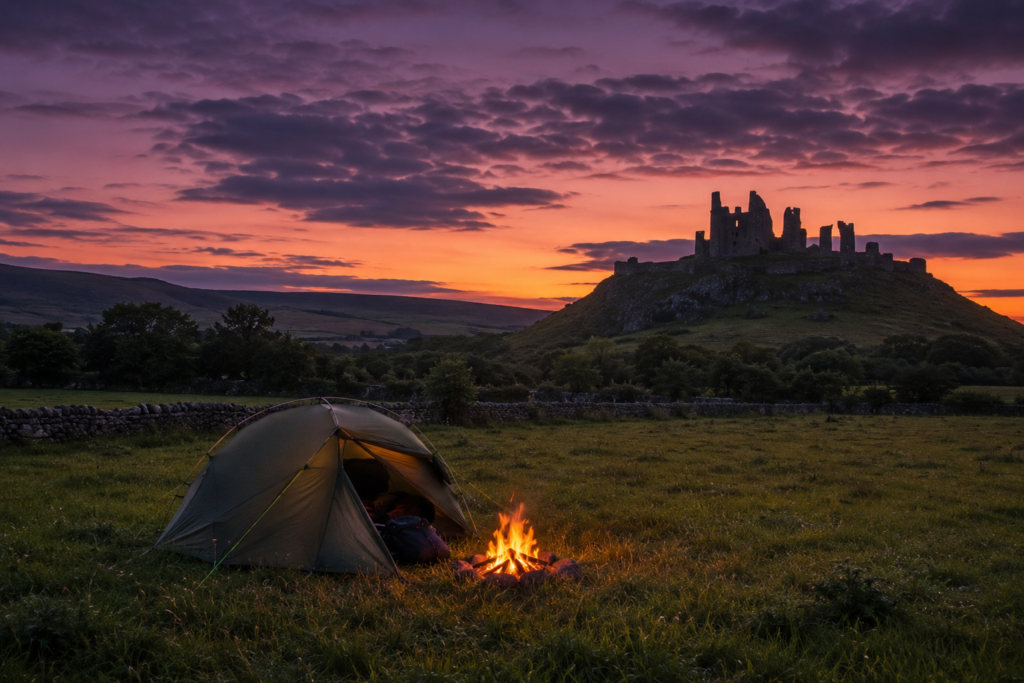
Our Campsites Near Castles cluster covers the best pitching spots near the UK’s most popular castle destinations. Start with our regional guides below.
Frequently Asked Questions
Which UK country has the most castles?
Wales has the highest density of castles per square mile of any country in the world, with over 600 sites. Scotland has the greatest total number of castle sites (over 3,000, including ruins and foundations), while England has the most castles open to the public as major visitor attractions.
Are there any free castles to visit in the UK?
Yes — many UK castles are free to visit, including Portchester Castle in Hampshire, parts of the Tower of London’s exterior, most Scottish Highlands ruins, and numerous sites managed by local councils. Members of English Heritage, the National Trust, Cadw, or Historic Environment Scotland get free access to hundreds of sites.
Which UK castle is best for children?
Warwick Castle is consistently rated the best UK castle for families, with daily jousting demonstrations, trebuchet firings, and immersive experiences. Alnwick Castle is excellent too, with Harry Potter connections and broomstick flying lessons. For a free option, Bamburgh Castle’s beach setting makes it naturally family-friendly.
Can I stay overnight in a UK castle?
Several UK castles offer accommodation within their walls or on their grounds. We cover this in detail in our guide to UK Castles You Can Actually Stay In — options range from grand hotel conversions to self-catering cottages in castle grounds.
What’s the oldest castle in the UK?
Chepstow Castle in Wales, begun in 1067 immediately after the Norman Conquest, is generally considered the oldest surviving stone castle in Britain. Windsor Castle was founded around the same time. Several Scottish hill forts predate the Norman period but are not typically classified as ‘castles’ in the traditional sense.
Ready to Start Exploring?
The UK’s castle heritage is one of the most extraordinary things about this small, history-drenched island. Whether you’re drawn to the grand royal fortresses of England, the wild clifftop ruins of Scotland and Wales, or the atmospheric coastal strongholds of Northern Ireland, there’s a castle out there waiting that will stay with you for years.
And if you’re planning to camp your way around them — which we’d strongly recommend — you’re in exactly the right place. Browse our regional campsite guides below and start planning your next heritage adventure.
| About the Author: Nikki writes about camping and castles from personal experience exploring the UK with a tent, a map, and an unhealthy enthusiasm for medieval history. Campsites and Castles (campsitesandcastles.com) is her guide to the UK’s greatest historic sites — seen from the best possible vantage point: a tent in a nearby field. |
📌 Pin this guide for later | 🏕️ campsitesandcastles.com