Walking the Roman Empire’s Edge: A Journey Along Hadrian’s Wall
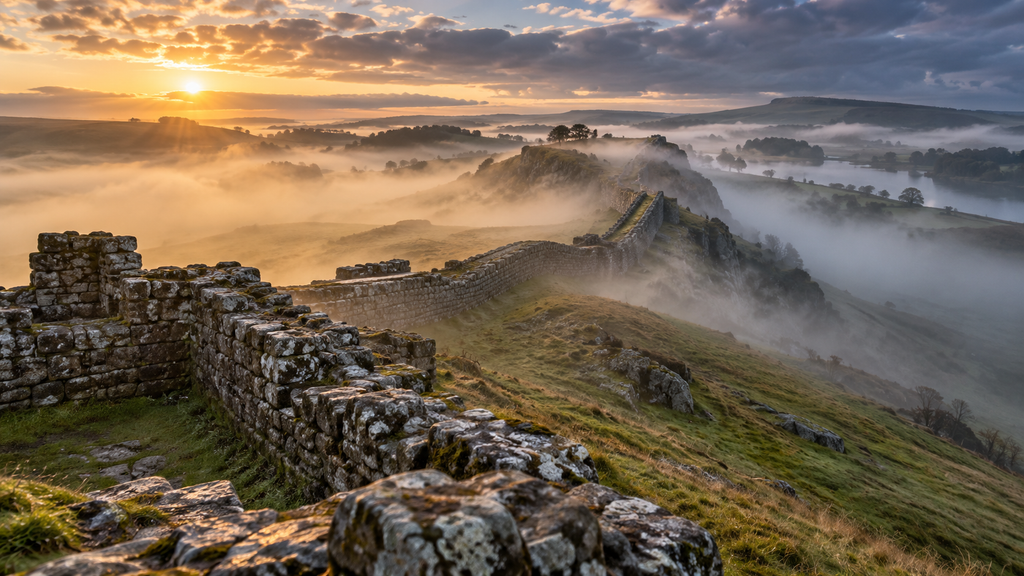
The morning mist rolls across the ancient stones like a ghostly tide. It temporarily obscures the vast expanse of Northumberland’s rugged landscape. I stand at the beginning of Hadrian’s Wall Path, ready to embark on a journey that will take me along one of the Roman Empire’s most remarkable achievements – a 73-mile fortification. One that once marked the northwestern frontier of Rome’s dominion.
A Monument to Roman Ambition
Built under the orders of Emperor Hadrian in 122 AD, this massive stone barrier stretched from Wallsend in the east to Bowness-on-Solway in the west. Today, nearly two millennia later, significant portions still stand as a testament to Roman engineering and determination. The wall wasn’t merely a barrier – it was a statement of power. It was a complex military installation, and ultimately, a symbol of the limits of empire.
The Living Landscape
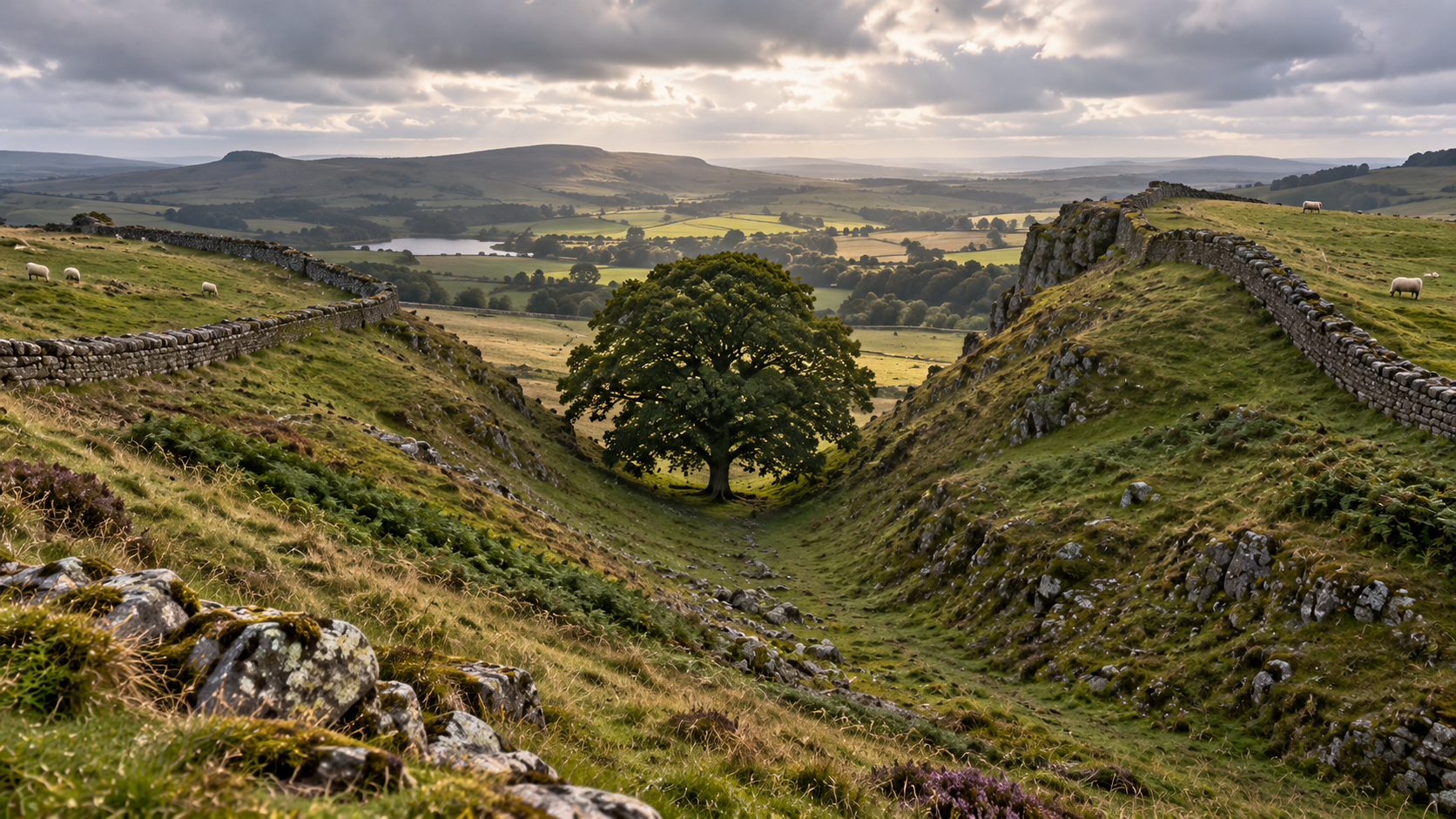
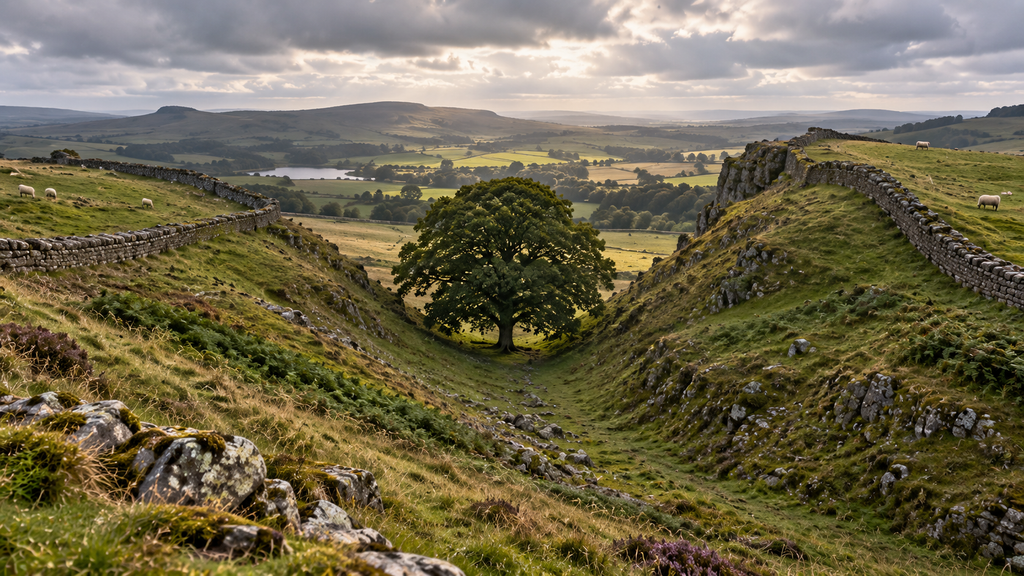
Walking the wall today is an exercise in time travel. The path winds through some of Britain’s most dramatic countryside. Weather-worn stones share space with grazing sheep and the occasional curious cow. At Sycamore Gap, made famous by Robin Hood: Prince of Thieves, a lone tree stands sentinel in a dramatic dip in the landscape, creating one of the most photographed spots along the entire route.
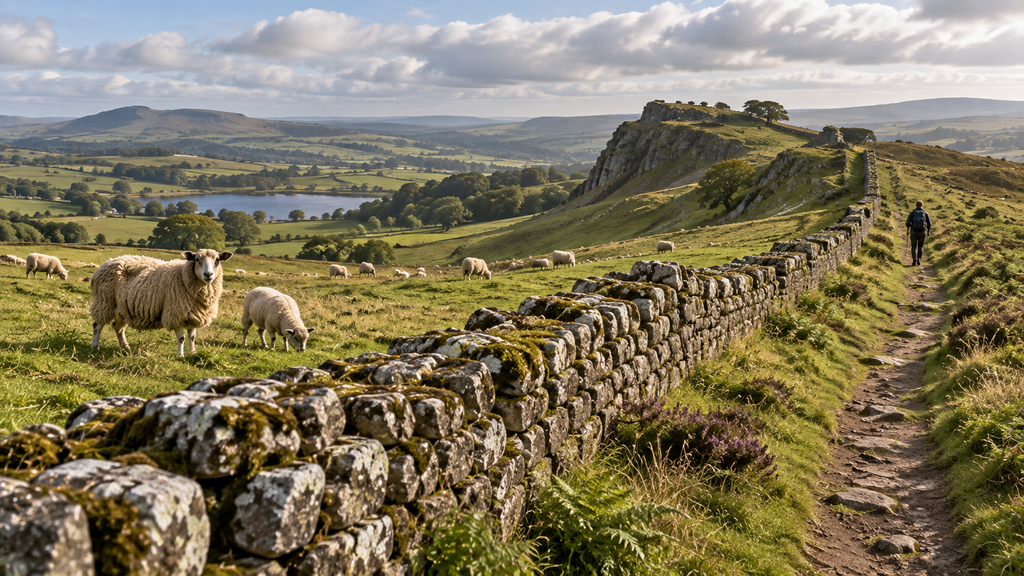
The wall follows the natural contours of the land, rising and falling along the Whin Sill escarpment. At points like Vercovicium (Housesteads Fort), you can still see the remains of barracks, granaries, and even communal latrines. A glimpses into the daily lives of the soldiers who once called this frontier home.
Archaeological Treasures
Every mile brings new discoveries. At Vindolanda, just south of the wall, ongoing excavations continue to unearth remarkable artifacts. Famous for its wooden writing tablets – the oldest surviving handwritten documents in Britain – this site offers an unparalleled window into Roman life. Personal letters, duty rosters, and even party invitations have been preserved in the oxygen-free soil for nearly 2,000 years.
Hadrian’s Wall A Living History
What strikes me most is how alive this ancient monument feels. Unlike many historical sites, Hadrian’s Wall isn’t cordoned off behind barriers. It’s integrated into the landscape, with local farms and communities existing alongside it just as they have for centuries. Sheep graze among the ruins, their wool occasionally catching on ancient stones, while hikers traverse paths worn by countless feet over millennia.
Modern Challenges
Yet this accessibility comes with challenges. The very features that make the wall so impressive – its length, its remote location, its exposure to the elements – also make it vulnerable. Climate change, erosion, and the steady tread of thousands of visitors each year all take their toll. Conservation efforts are ongoing, balancing the need to preserve this UNESCO World Heritage site with making it accessible to visitors.
Walking Through Time
As I make my way along the path, each step feels like a connection to the past. I think about the legionaries who once patrolled these same routes, the merchants who passed through its gates, and the local Britons who lived in its shadow. The wall wasn’t just a barrier – it was a meeting point of cultures, a place where empire met wilderness, where Roman met Briton.
Practical Tips for Modern Explorers
For those inspired to follow in these ancient footsteps:
- The full walk typically takes 6-7 days, though shorter sections are easily accessible
- The best time to visit is May through October
- Base yourself in towns like Hexham or Haltwhistle for easy access
- Don’t miss the excellent museums at Vindolanda and Chesters
- Prepare for changeable weather – the wall’s exposure means conditions can shift rapidly
Hadrian’s Wall A Lasting Legacy
As the sun sets on my final day of walking, casting long shadows across the ancient stones, I reflect on what Hadrian’s Wall represents. It’s more than just a relic of empire – it’s a reminder of humanity’s enduring ambition to shape the landscape, to leave our mark on the world. In an age of virtual connections and digital borders, there’s something profound about this physical boundary that has endured for nearly two thousand years.
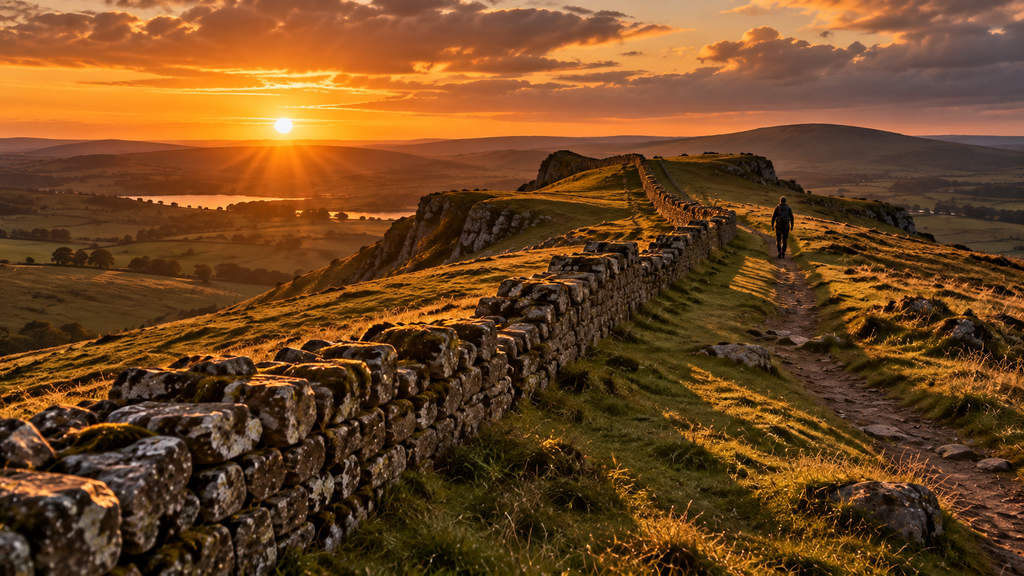
The wall may no longer mark the edge of an empire, but it continues to capture imaginations and inspire wonder. In walking its length, we don’t just traverse a landscape – we walk through history itself, following in the footsteps of countless others who have marveled at this remarkable achievement.
Whether you’re a history enthusiast, a dedicated hiker, or simply someone seeking to connect with the past, Hadrian’s Wall offers an unforgettable journey through time. As you walk along these ancient stones, you’re not just observing history – you’re becoming part of its ongoing story.
More from Campsites and Castles: