British Castle History: From Norman Conquest to National Trust
Few structures capture the British imagination quite like a castle. Whether it’s a crumbling ruin on a Welsh hillside or a perfectly preserved fortress guarding a Scottish loch, every castle in Britain tells a chapter of a much bigger story — one that stretches back nearly a thousand years, through conquest, rebellion, romance, and preservation.
Understanding British castle history doesn’t just make for interesting reading. It transforms every visit. Once you know why a castle sits where it sits, or why its walls are shaped the way they are, you stop seeing “an old ruin” and start seeing a physical timeline of British power, war, and identity.
This guide walks through that timeline in full — from the first Norman earthworks thrown up in the months after 1066, through the golden age of stone fortresses, to the country houses, ruins, and heritage sites we visit today. Along the way, we’ll point you toward specific castles where each era still survives, so you can walk through history rather than just read about it.
Before the Castle: Anglo-Saxon and Iron Age Fortifications
Britain wasn’t undefended before 1066. Iron Age hillforts like Maiden Castle in Dorset and Anglo-Saxon burhs (fortified towns established under Alfred the Great) already dotted the landscape. But these were communal defences, built to protect a population — not private strongholds built to control one.
That distinction matters enormously. The castle, as a concept, wasn’t really about defending Britain from outside invaders. It was a tool of internal control, imported wholesale by a conquering elite. Which brings us to 1066.
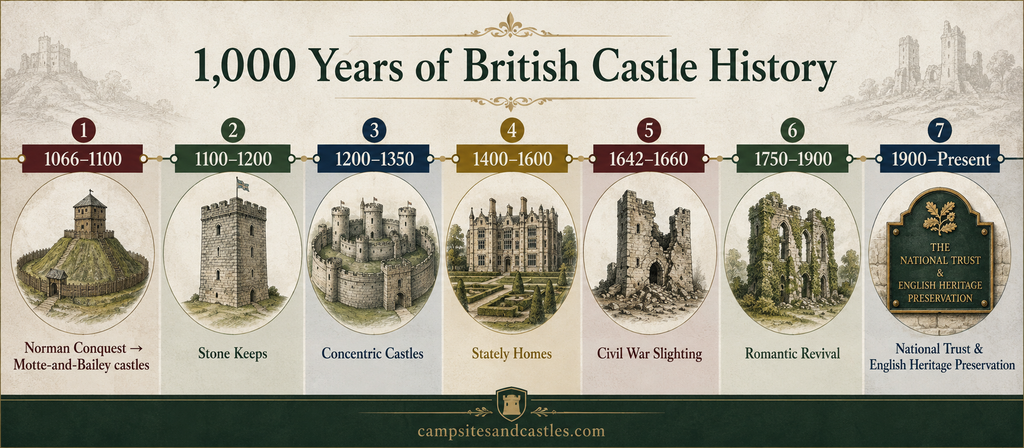
The Norman Conquest and the Birth of the British Castle (1066–1100)
When William the Conqueror defeated Harold II at the Battle of Hastings in October 1066, he faced an immediate problem: how does a few thousand Norman knights hold down an entire hostile country?
The answer was the motte-and-bailey castle — and it is, without exaggeration, the single most important development in British castle history. These structures could be built astonishingly fast, in weeks rather than years, using earth, timber, and forced local labour.
A motte-and-bailey had two parts:
- The motte — a steep, man-made mound topped with a wooden tower (the keep), used for defence and to project authority over the surrounding land.
- The bailey — an enclosed courtyard at the base of the motte, protected by a ditch and palisade, housing stables, workshops, and living quarters.
Within twenty years of Hastings, William had ordered the construction of an estimated 500–1,000 of these castles across England. This wasn’t primarily about repelling foreign invasion. It was about garrisoning a hostile population — every motte-and-bailey was a visible, physical reminder that a new ruling class was now in charge, and it could crush rebellion within days by riding out from its nearest stronghold.
The most famous survivor of this era isn’t wooden at all — it’s the White Tower at the Tower of London, begun around 1078. Unlike most Norman castles, it was built in stone from the outset, and it remains one of the best-preserved Norman keeps anywhere in Europe.
Where to see this era today: Windsor Castle (still occupying its original 1070s motte), the Tower of London, and the earthworks at Berkhamsted Castle, Hertfordshire.
Campsites Near Windsor Castle and the Thames Valley
Stone Keeps and the Age of Fortification (1100–1200)
Timber rots, burns, and can be undermined. As Norman rule stabilised into the 12th century, the wealthiest lords began rebuilding their wooden keeps in stone — a shift that turned castles from temporary military camps into permanent seats of power.
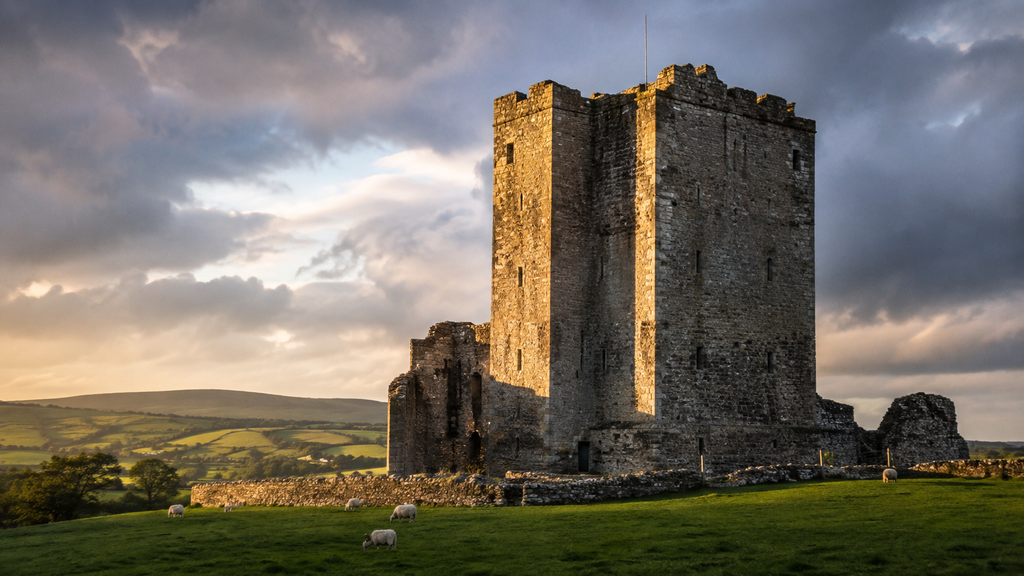
This period produced the great rectangular keeps (also called “square keeps”) that most people picture when they imagine a medieval castle: thick-walled, multi-storey stone towers with a hall, chapel, and private chambers stacked vertically. Dover Castle’s Great Tower, built for Henry II in the 1180s, is the finest surviving example — a genuine architectural flex, designed as much to impress visiting dignitaries as to withstand a siege.
Castles in this era served three overlapping functions that are easy to forget when you only think of them militarily:
- Military strongpoints — controlling roads, river crossings, and borders
- Administrative centres — courts were held, taxes collected, and justice dispensed from the great hall
- Symbols of lordly status — the taller and more elaborate the keep, the higher the lord’s standing
By the end of the 12th century, castle design was already starting to evolve again, as lords realised that a single square tower had a fatal weakness: its corners.
Where to see this era today: Dover Castle (Kent), Rochester Castle (Kent), Castle Hedingham (Essex).
Best Castles in Kent: The ‘Garden of England’ Heritage Trail
Concentric Castles and the Age of Military Innovation (1200–1350)
The 13th century is when British castle architecture reached its technical peak — and nowhere is that clearer than in Edward I’s Welsh castles, built to crush Welsh resistance following his invasions of 1277 and 1282–83.
Square corners had proven vulnerable to undermining (tunnelling beneath a corner to collapse it), so architects shifted to round towers, which had no weak angle to attack. More importantly, castles now adopted a concentric design: rings of walls nested inside one another, so that even if attackers breached the outer wall, they found themselves trapped in a killing ground overlooked by the inner ring.
Edward I employed the master architect James of St George to build a chain of castles across North Wales that remain, to this day, among the most sophisticated medieval fortifications in Europe:
- Caernarfon Castle — deliberately styled with polygonal towers and banded stonework to echo the walls of Constantinople, a calculated statement of imperial power
- Conwy Castle — integrated directly into the town walls, controlling both the fortress and the settlement around it
- Harlech Castle — perched on a rock outcrop with a fortified stairway down to the sea, allowing resupply by ship during a siege
- Beaumaris Castle — never fully finished, but the most technically “perfect” concentric design ever built in Britain
These castles weren’t cheap. Historians estimate Edward I’s Welsh castle-building programme cost roughly £80,000 — a genuinely staggering sum in 13th-century terms, funded partly through crushing taxation.
Where to see this era today: Caernarfon, Conwy, Harlech, and Beaumaris castles (all UNESCO World Heritage Sites), plus Bodiam Castle in Sussex as a slightly later, more romantic example of moated concentric design.
The Most Spectacular Castles in Wales (And Where to Camp Nearby)
Decline of the Military Castle and the Rise of the Stately Home (1400–1600)
By the 15th century, two forces were quietly making the traditional castle obsolete: gunpowder and peace.
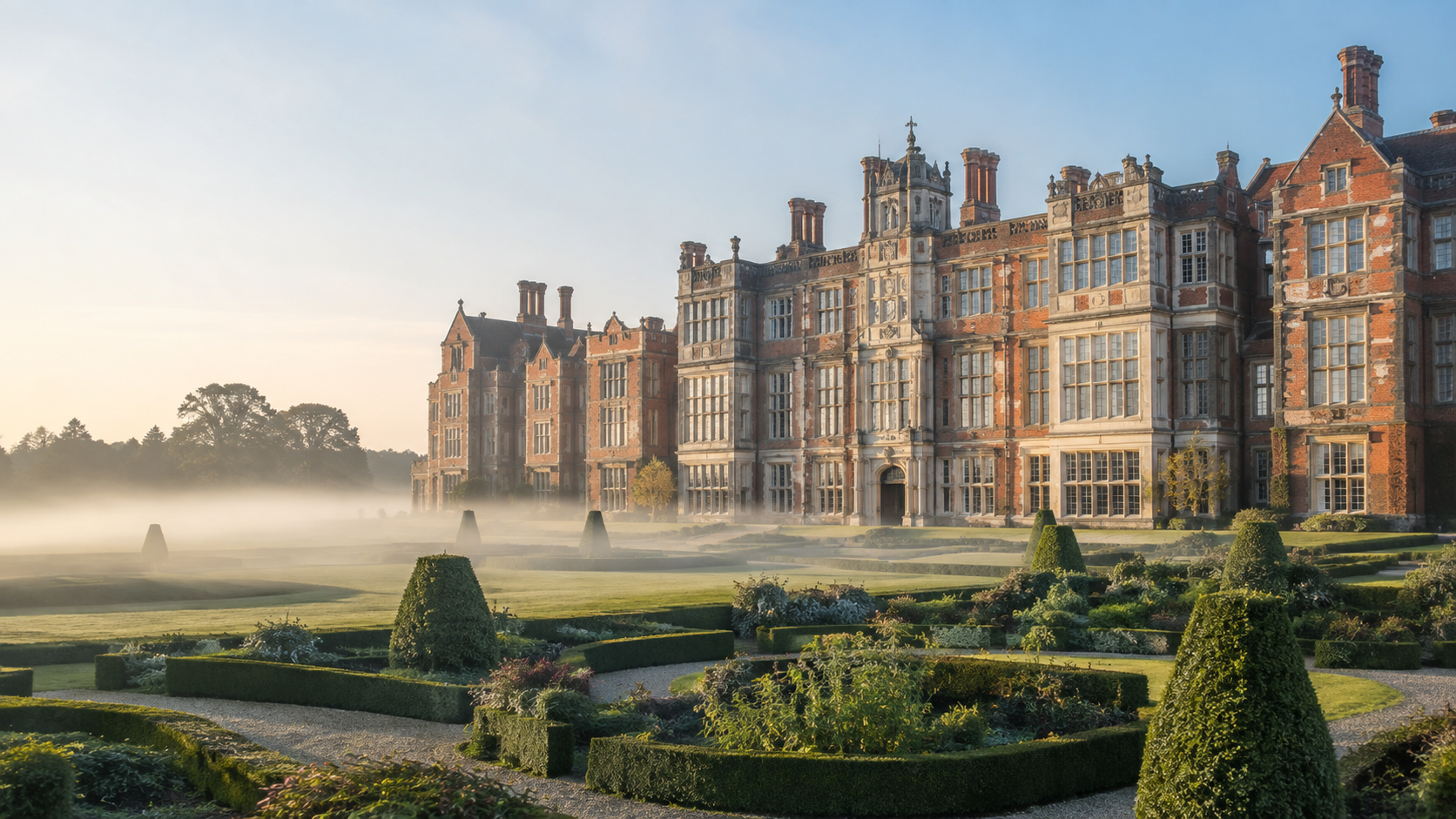
Cannon fire made thick vertical stone walls a liability rather than an asset — a well-aimed shot could bring down masonry that had withstood centuries of siege engines. At the same time, the Wars of the Roses gave way to Tudor stability, and the aristocracy increasingly wanted homes that displayed wealth and taste rather than defensive strength.
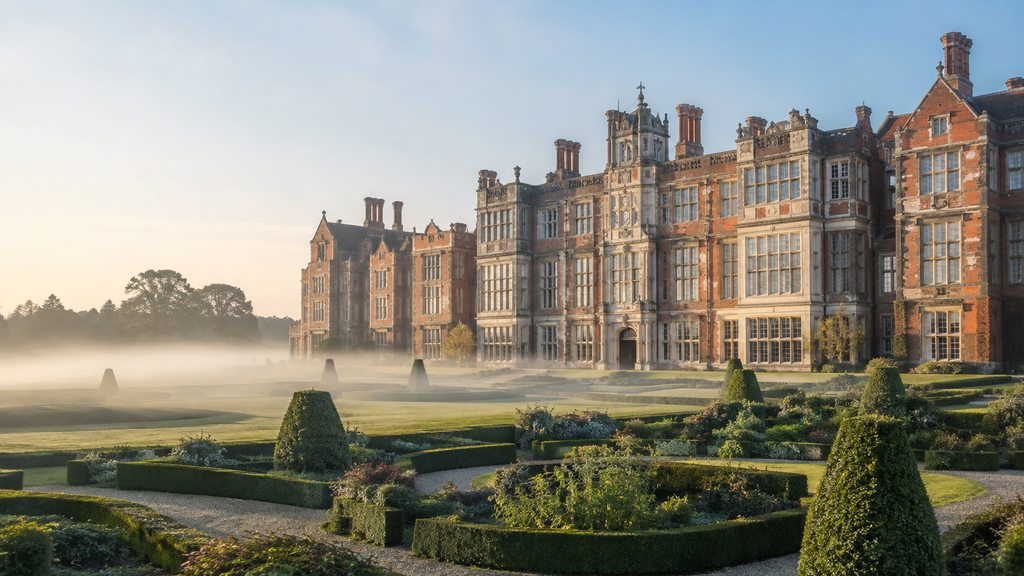
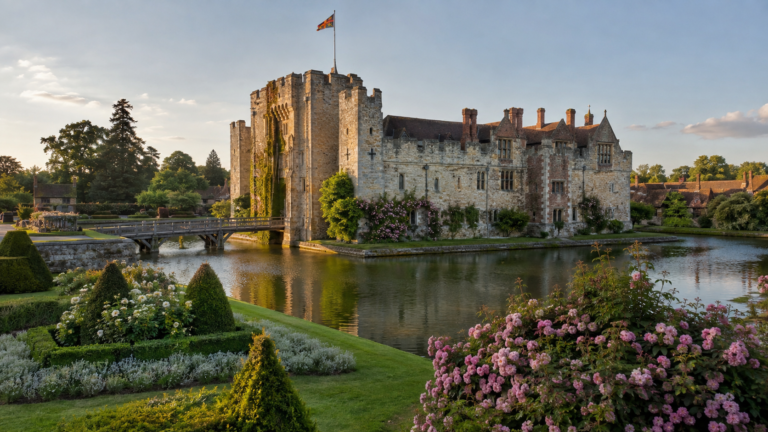
The result was a gradual architectural pivot. Grand courtiers began building castle-style palaces that borrowed the visual language of fortification — towers, battlements, gatehouses — purely for aesthetic effect, with none of the actual defensive substance. Hampton Court Palace and Henry VIII’s remodelling of various royal castles reflect this shift: comfort, light, and display were now more important than arrow-slits and murder-holes.
Genuine defensive castles didn’t disappear overnight, but new ones were rarely built. Existing castles were increasingly adapted into comfortable residences, with large windows cut into once-defensible walls — a change you can often spot today by looking for mismatched stonework.
Where to see this era today: Hampton Court Palace, Hever Castle (Kent), and the Tudor apartments within Windsor Castle.
The English Civil War and the “Slighting” of Castles (1642–1660)
The Civil War gave surviving medieval castles one final, brutal military purpose — and it’s also the reason so many of Britain’s most photogenic ruins look the way they do today.
Both Royalist and Parliamentarian forces reoccupied and refortified old castles as strongholds. But once Parliament won, it faced the same problem William the Conqueror had solved centuries earlier, in reverse: how do you stop a castle being used against you in the future?
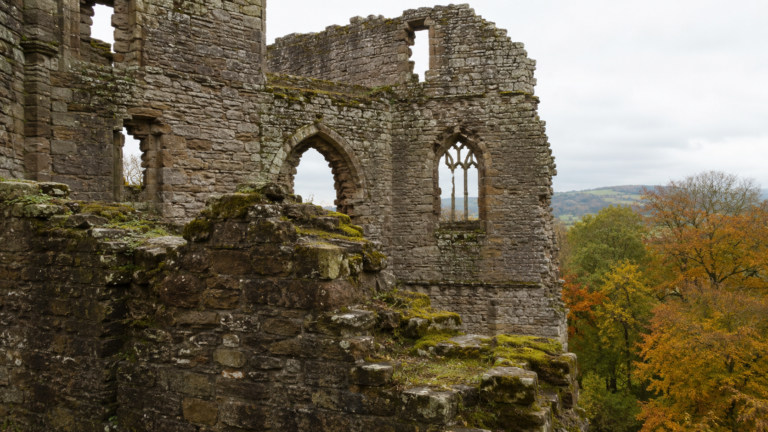
The answer was slighting — the deliberate, partial demolition of a castle’s defences to render it militarily useless, while often leaving enough standing to remain habitable or at least picturesque. Corfe Castle in Dorset is the textbook example: besieged twice, betrayed from within, and then blown apart with gunpowder by Parliamentary forces in 1646. Its shattered, tilted towers are a direct physical record of that destruction.
This is the era that quietly created much of what we now think of as “the classic castle ruin” — jagged, roofless, romantic. It wasn’t decay. It was policy.
Where to see this era today: Corfe Castle (Dorset), Kenilworth Castle (Warwickshire), Pontefract Castle (Yorkshire).
The Romantic Revival and Gothic Fascination (1750–1900)
By the 18th century, something unexpected happened: Britain fell back in love with its ruined castles — not as military assets, but as aesthetic and emotional experiences.
The Romantic movement prized wild landscapes, melancholy ruins, and a sense of the sublime, and castles fit perfectly. Painters like J.M.W. Turner made careers partly out of castle ruins bathed in stormy light. Landowners deliberately incorporated genuine or artificial ruins into landscaped grounds as picturesque focal points (“follies”), and Gothic Revival architecture — pointed arches, turrets, battlements — became hugely fashionable for entirely new buildings that had never seen a siege in their lives.
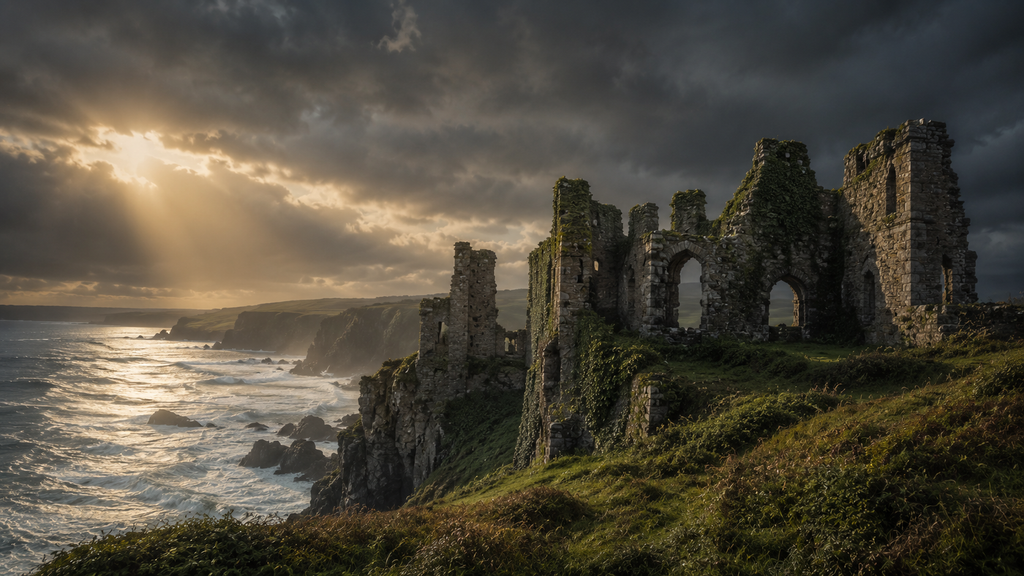
This is also the period that produced some of Britain’s most famous castle-inspired fantasy: Horace Walpole’s Strawberry Hill House, and later, the full-blown Victorian romanticism of castles like Cardiff Castle, dramatically remodelled by architect William Burges in the 1860s–70s into a fantasy of Gothic towers and lavishly decorated interiors — a castle built to evoke medieval grandeur far more than to defend anyone.
Where to see this era today: Cardiff Castle (Wales), Tintagel Castle (Cornwall, reimagined with a dramatic footbridge that plays into its legendary Arthurian associations), and countless landscaped “ruins” across National Trust parkland.
Preservation and the Birth of Heritage Care (1900–Present)
By the early 20th century, Britain faced a new question: who is responsible for looking after a thousand years of crumbling castles once they’re no longer lived in, fought over, or fashionable?
Two organisations now shape almost every castle visit in the UK:
- The National Trust, founded in 1895, began acquiring historic buildings and landscapes — including castles — to preserve them “forever, for everyone.” Its focus tends to lean toward castles as part of wider historic estates and landscapes.
- English Heritage, established in its modern form in 1983 (taking over state-owned historic sites), manages many of the most significant ruined and military castles, including several of Edward I’s Welsh fortresses (jointly with Cadw, the Welsh government’s heritage service) and sites like Dover and Kenilworth.
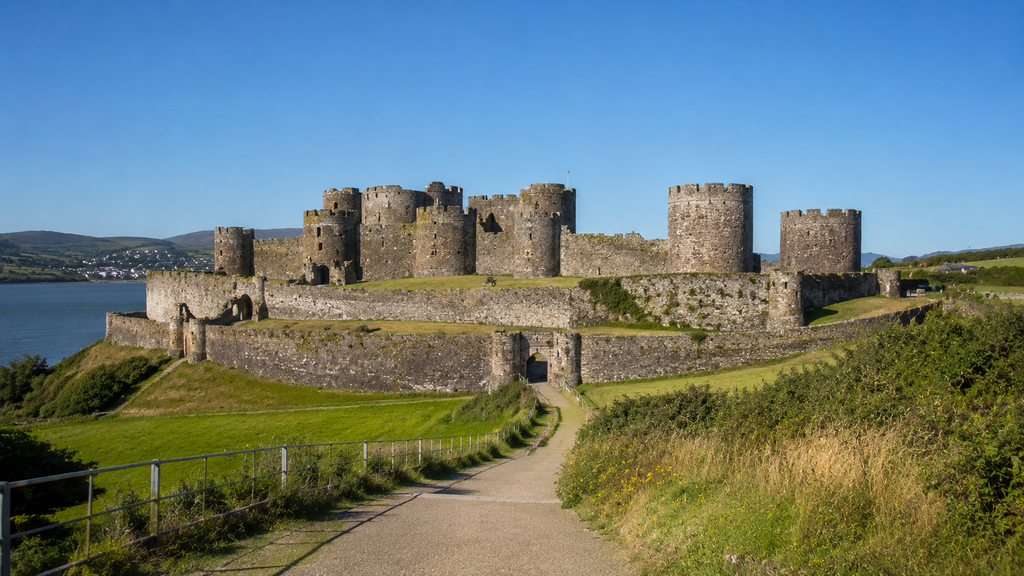
This era introduced professional conservation: controlled masonry consolidation, archaeological surveys before any repair work, visitor infrastructure, and — crucially — the philosophy that a ruin should usually be stabilised, not rebuilt. That’s why so many British castles remain evocatively roofless rather than reconstructed to their medieval appearance.
Today, castle tourism is a significant part of the UK heritage economy, and it’s exactly this layered history — Norman earthworks, Edwardian stone, Civil War slighting, Victorian romance, and modern conservation — that makes visiting a British castle so much richer than visiting almost any other kind of historic site. You’re rarely looking at one era. You’re looking at all of them, stacked on top of each other.
How to “Read” a British Castle When You Visit
Once you know this timeline, you can start spotting the clues yourself:
- A grassy mound with no stone on it → likely an original Norman motte, timber long since gone
- A square, thick-walled tower → 12th-century Norman keep
- Round towers and multiple concentric walls → 13th/14th-century military engineering, often Edwardian
- Large windows cut into old walls, or a “too pretty” symmetrical layout → Tudor or later remodelling for comfort, not defence
- Deliberately shattered or tilted walls → Civil War slighting
- A ruin that seems a little too perfectly composed against the landscape → Georgian/Victorian romantic landscaping
Final Thoughts
British castle history isn’t really the story of buildings — it’s the story of who held power, how they held it, and how attitudes toward that power changed over a thousand years. A single afternoon at a site like Conwy or Corfe can take you through conquest, siege, deliberate destruction, and centuries of careful preservation, all within the same set of walls.
If you’re planning a trip that combines this history with time outdoors, our guide to [The Ultimate Guide to Camping Near UK Castles] is the natural next stop — pairing the history above with practical advice on where to pitch a tent close to the sites that inspired it.